I still remember the exact moment this salad wrecked my life—in the best possible way. It was one of those frantic pre-holiday evenings when the fridge looked like a tornado had whirled through the farmers' market: half a bunch of kale clinging to life, a lonely delicata squash eyeing me from the corner, and a container of pomegranate arils I'd bought on impulse because they looked like tiny rubies. I was supposed to bring "something green" to my friend's potluck, but I had twenty-five minutes before ride-share surge pricing kicked in and exactly zero inspiration. The plan was to throw ingredients together, pray they didn't revolt, and sprint out the door. Instead, I created a dish that made people cancel second helpings of pumpkin pie. True story.
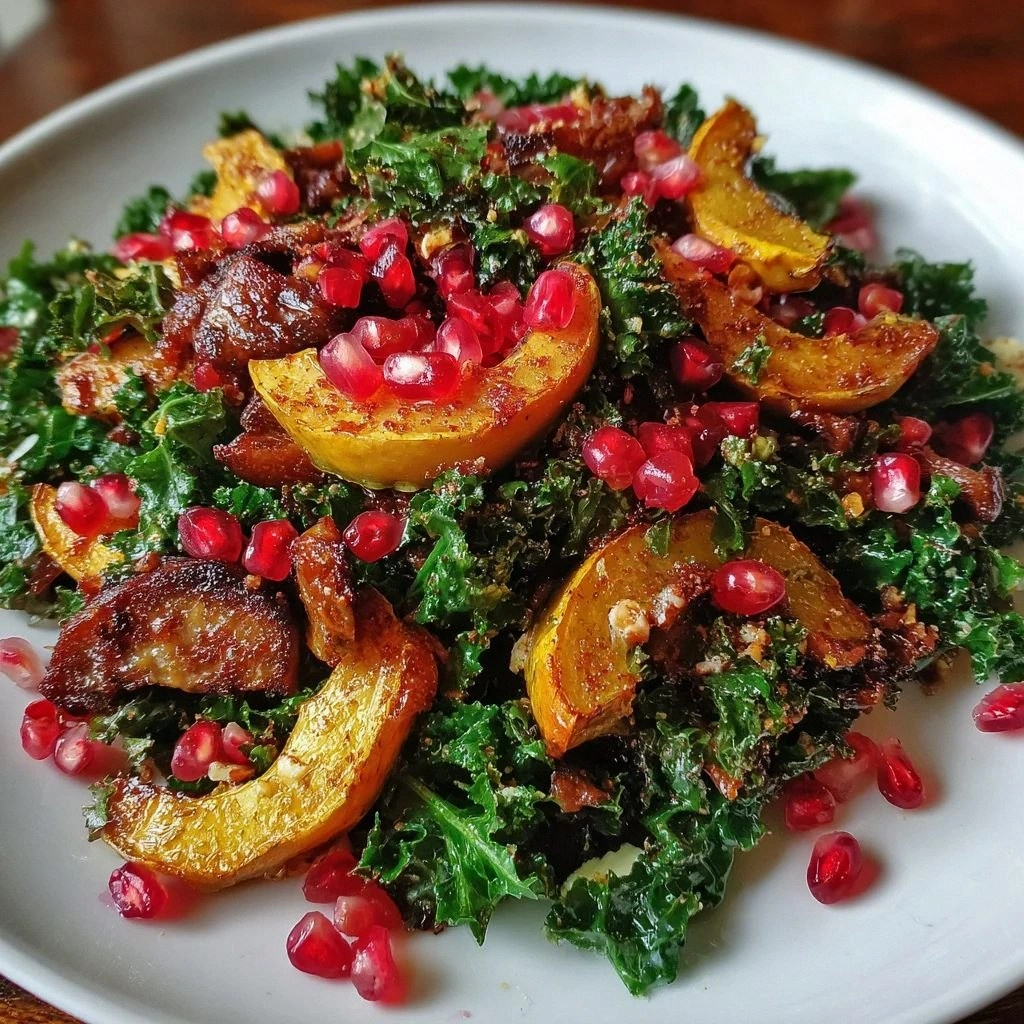
Picture this: it's raining outside, Fleetwood Mac is playing a little too loud, and the whole kitchen smells like caramelizing squash and garlic sizzling in olive oil. The pomegranate seeds pop between your teeth like nature's Pop Rocks, the goat cheese melts into warm farro, and the kale—massaged into silky submission—soaks up every drop of maple-cider vinaigrette. I plated it on my cracked ceramic platter, drizzled the dressing in a zig-zag because aesthetics matter when you're chronically late, and dashed to the party. Five minutes after I walked in, the platter returned to the kitchen—empty except for one apologetic leaf. People were literally scraping the dressing off the bottom with sweet-potato fries. I knew I'd stumbled onto something borderline dangerous.
Since then, this salad has become my secret weapon at Friendsgivings, office lunches, and "I need vegetables but I want joy" Tuesdays. It's the culinary equivalent of a chunky knit sweater: cozy yet sophisticated, forgiving yet impressive, and somehow both healthy and indulgent. I dare you to taste this and not go back for seconds. Ready for the game-changer?
Let me walk you through every single step—by the end, you'll wonder how you ever made it any other way.
What Makes This Version Stand Out
- Taste Explosion: Sweet roasted squash, tangy goat cheese, peppery kale, and bright pomegranate create a four-part harmony that crashes over your palate like a symphony finale. Most recipes lean too sugary or too bitter; this one hits the exact midpoint where every bite feels like autumn sunshine.
- Texture Playground: You've got chewy farro, creamy cheese, crunchy seeds, and tender greens—so your fork never gets bored. Contrast is the difference between "nice salad" and "can't-stop-eating salad," and we pack four distinct textures into every bite.
- Foolproof Simplicity: One sheet pan, one saucepan, one bowl. No blanching, no double boilers, no culinary-school wizardry. If you can chop and stir, you can nail this dish on a weeknight while helping kids with math homework.
- Unexpected Heat: A whisper of chili powder and smoked paprika gives warmth without heat, like wearing a scarf indoors. It's the subtle background note that makes guests ask, "Why does this taste so much better than my usual squash?"
- Crowd Shock Factor: People expect boring lettuce; they get a jewel-toned mountain that photographs like a magazine spread. I've watched self-proclaimed kale-haters sneak thirds and then ask for the recipe with sheepish grins.
- Make-Ahead Magic: Roast the squash and cook the farro on Sunday, store them separately, and you can assemble lunch in under four minutes all week. The flavors actually improve overnight—something most salads can't claim without wilting into sadness.
- Ingredient Integrity: Nothing is hidden under heavy dressing or overcooked into mush. Each component tastes exactly like itself, only better, because we coax out natural sugars and season thoughtfully.
Alright, let's break down exactly what goes into this masterpiece...
Inside the Ingredient List
The Flavor Base
Kale is not the villain your childhood cafeteria led you to believe. We're talking lacinato (dinosaur) kale, the dark, bumpy kind that tastes like earth and minerals and survives winter frosts. Removing those fibrous center ribs transforms it from punishment to pleasure, and a sixty-second massage with a drizzle of oil turns the leaves silky, almost like they've been lightly steamed. Skip this step and you'll be chewing like a grazing cow; do it right and you'll understand why kale became a superstar in the first place.
The Texture Crew
Delicata squash is autumn's best-kept secret: a sweet, thin-skinned squash that roasts into caramelized coins without the wrestling match of peeling butternut. The edible skin means less prep and more color, plus those natural ridges catch dressing like tiny flavor gutters. If you absolutely can't find delicata, sub with butternut—just peel it, because life is too short for tough squash skin. Roast until the bottoms are nearly black; that's where the smoky sweetness lives.
Farro is the chew squad captain, an ancient wheat grain that stays al dente even after days in the fridge. Its nutty backbone anchors the salad so you're not just eating a bowl of sweet things with leaves. Quinoa works if you're gluten-free, but you'll lose that hearty, pasta-like bite. Pro tip: simmer in salted water like pasta, drain when tender, and spread on a sheet pan to cool—this prevents clumps and keeps every grain distinct.
The Unexpected Star
Pomegranate arils are nature's conversation starter. They burst between molars, releasing tart juice that cuts through rich goat cheese like a squeeze of lemon on pancakes. Buy whole pomegranates when possible; the pre-packed seeds cost triple and often taste like refrigerated regret. To seed one in under a minute, halve it horizontally, hold a section cut-side down over a bowl, and whack the skin with a wooden spoon—gravity and aggression do the work.
The Final Flourish
Goat cheese (chevre) brings tangy creaminess that melts slightly on warm squash, creating pockets of dairy lava you'll hunt for like buried treasure. Feta can pinch-hit, but goat cheese's softer texture integrates better rather than crumbling into salty pebbles. Buy the log, not the tub of crumbles—it's fresher and you control the size of those dreamy blobs.
Everything's prepped? Good. Let's get into the real action...
The Method — Step by Step
- Crank your oven to 425 °F (220 °C). While it heats, slice your delicata squash into half-moons about half an inch thick—thick enough to hold shape, thin enough for crispy edges. Toss the moons in a bowl with two tablespoons olive oil, a half-teaspoon chili powder, and a generous pinch each of salt and pepper. Spread them on a parchment-lined sheet pan like you're dealing playing cards; overlap equals steam, and steam equals mush. Slide the pan into the oven and set a timer for twenty minutes. Your kitchen will start smelling like caramel and camping trips—this is the smell of autumn gaining flavor ammunition.
- Meanwhile, bring a medium saucepan of salted water to a boil for the farro. Think pasta water—salty like the sea—because under-seasoned grains are why "healthy food tastes bland." Once boiling, dump in one cup farro, reduce to a lively simmer, and cook for twenty-five to thirty minutes. Stir once or twice to prevent sticking, but otherwise let it do its thing while you scroll memes. When it's tender with a tiny white fleck in the center, drain it like pasta and spread on a plate to cool; this stops cooking and keeps grains fluffy, not gummy.
- While grains bubble and squash roasts, tackle the kale. Strip leaves off the stems by pinching the base and pulling upward—imagine you're sliding money into a vending machine. Stack leaves, roll like a cigar, and slice into thin ribbons. You'll need about six packed cups, which looks like an insane amount but wilts under dressing like spinach in a hot pan. Toss ribbons into your largest bowl and drizzle with a teaspoon of oil and a pinch of salt. Now massage: squeeze, knead, twist—pretend you're trying to get beach sand out of a towel. After sixty seconds the leaves darken, shrink by half, and feel silky like expensive linen. This is the difference between "why do people eat this" and "I could house a mountain."
- Time to build the dressing. In a jam jar or small bowl, combine three tablespoons olive oil, two tablespoons apple cider vinegar, one tablespoon maple syrup, one clove grated garlic, half a teaspoon smoked paprika, and a pinch each of salt, pepper, and chili powder. Shake or whisk until it looks like liquid bronze. Dip a kale shard in and taste; it should make your tongue dance between sweet, tangy, and smoky. Adjust salt or vinegar if it tastes flat—acid is the difference between "meh" and "more."
- Check the squash—edges should be blistered and bottoms caramelized to a deep mahogany. A little char is good; black is bitter. Flip slices with tongs, roast another five minutes if you like them extra toasty, then let them cool on the pan for five minutes. Hot squash tossed directly with kale wilts it into sad submission, but slightly warm squash marries flavors like a cozy dinner party.
- Assemble the masterpiece. Add cooled farro to massaged kale, followed by half the goat cheese and half the pomegranate arils. Pour on about three-quarters of the dressing and toss until every ribbon glistens. Taste a leaf: you want brightness first, then warmth, then a little cheese funk. Add more dressing if it feels dry, remembering that squash will contribute moisture. Finally, top with remaining cheese and arils so they stay visible—presentation counts when everyone's phone is a food photographer.
- Serve immediately if you crave temperature contrast, or let it sit thirty minutes for flavors to meld. I dare you to taste this and not go back for seconds. Bonus points: drizzle a tiny swirl of balsamic reduction on top for Pinterest-worthy glamour, but honestly, it disappears so fast no one will remember the garnish.
That's it—you did it. But hold on, I've got a few more tricks that'll take this to another level...
Insider Tricks for Flawless Results
The Temperature Rule Nobody Follows
Most recipes overlook temperature like it's a minor detail, but here's the truth: lukewarm squash plus cool kale equals wilted sadness. Let the roasted squash rest until it's just warm—about five minutes—before tossing. This melts the goat cheese ever so slightly, creating pockets of creamy lava without turning the greens into steamed spinach. If you're meal-prepping, store squash separately and reheat for thirty seconds in the microwave before combining. Your future self will high-five you.
Why Your Nose Knows Best
Farro is done when it smells like buttery popcorn and the grains look plump with a tiny white speck in the center. If it smells dusty or the water is starchy like glue, you've overshot into mush-town. Drain immediately and spread on a plate; residual heat keeps cooking grains even off the stove. A friend tried skipping this step once—let's just say it didn't end well, and her coworkers still call it "porridge salad."
The 5-Minute Rest That Changes Everything
After dressing, let the salad sit covered on the counter for five minutes before serving. This brief pause lets salt draw moisture out of the kale and farro, creating a self-marinade that tastes as if you spent hours layering flavors. It's the difference between "fresh but disjointed" and "harmonious autumn choir." Stay with me here—this is worth it.
Creative Twists and Variations
This recipe is a playground. Here are some of my favorite ways to switch things up:
Thanksgiving Leftover Remix
Swap roasted squash for leftover turkey and roasted sweet potatoes, add dried cranberries if pomegranates aren't in season, and fold in a spoonful of cranberry sauce whisked into the dressing for tangy sweetness. It's the day-after sandwich in salad form, minus the food coma.
Winter Citrus Burst
Replace pomegranate with segmented blood oranges and swap maple syrup in the dressing for a splash of orange juice. Add toasted pecans for crunch and a whisper of rosemary instead of chili powder. Suddenly it's December on a plate.
Spring Green Revival
Use asparagus instead of squash, quinoa in place of farro, and add blanched peas plus handfuls of fresh mint. Lemon juice subs for vinegar, and crumbled ricotta salata gives a milder, milky contrast. Light, grassy, perfect for patio lunches.
Spicy Southwest Kick
Season squash with cumin and coriander, add a can of rinsed black beans, and swap goat cheese for queso fresco. Finish with a squeeze of lime and a shower of cilantro. Serve alongside tacos and watch it vanish faster than chips and salsa.
Protein Power Bowl
Add a jammy seven-minute egg and a handful of roasted chickpeas. The yolk becomes extra dressing, and chickpeas add crunch without crouton calories. Gym rats will worship you.
Kids Love It Too
Chop kale into confetti so it's less intimidating, roast squash until it's practically candy, and let them shake the dressing in a jar. Call pomegranate seeds "ruby sprinkles" and watch them devour vegetables while feeling like pirates hunting treasure.
Storing and Bringing It Back to Life
Fridge Storage
Pack components separately for maximum lifespan: kale dressed keeps three days, roasted squash up to five, farro for a week, and pomegranate arils for two weeks in an airtight container lined with paper towel. Combined salad stays vibrant for forty-eight hours if undressed. Use glass containers; plastic absorbs garlic odors faster than gossip spreads at book club.
Freezer Friendly
Roasted squash and cooked farro freeze beautifully for two months. Spread on a sheet pan to freeze individually, then transfer to bags so you can scoop exact portions. Thaw overnight in the fridge or microwave in thirty-second bursts. Do not freeze dressed kale unless you enjoy soggy dollar bills.
Best Reheating Method
Revive chilled squash in a dry skillet over medium heat for three minutes; it re-caramelizes edges and wakes up flavors. Add a tiny splash of water before reheating farro in the microwave; it steams back to perfection. Toss everything together with a fresh drizzle of dressing and a pinch of salt—tastes like you just cooked.