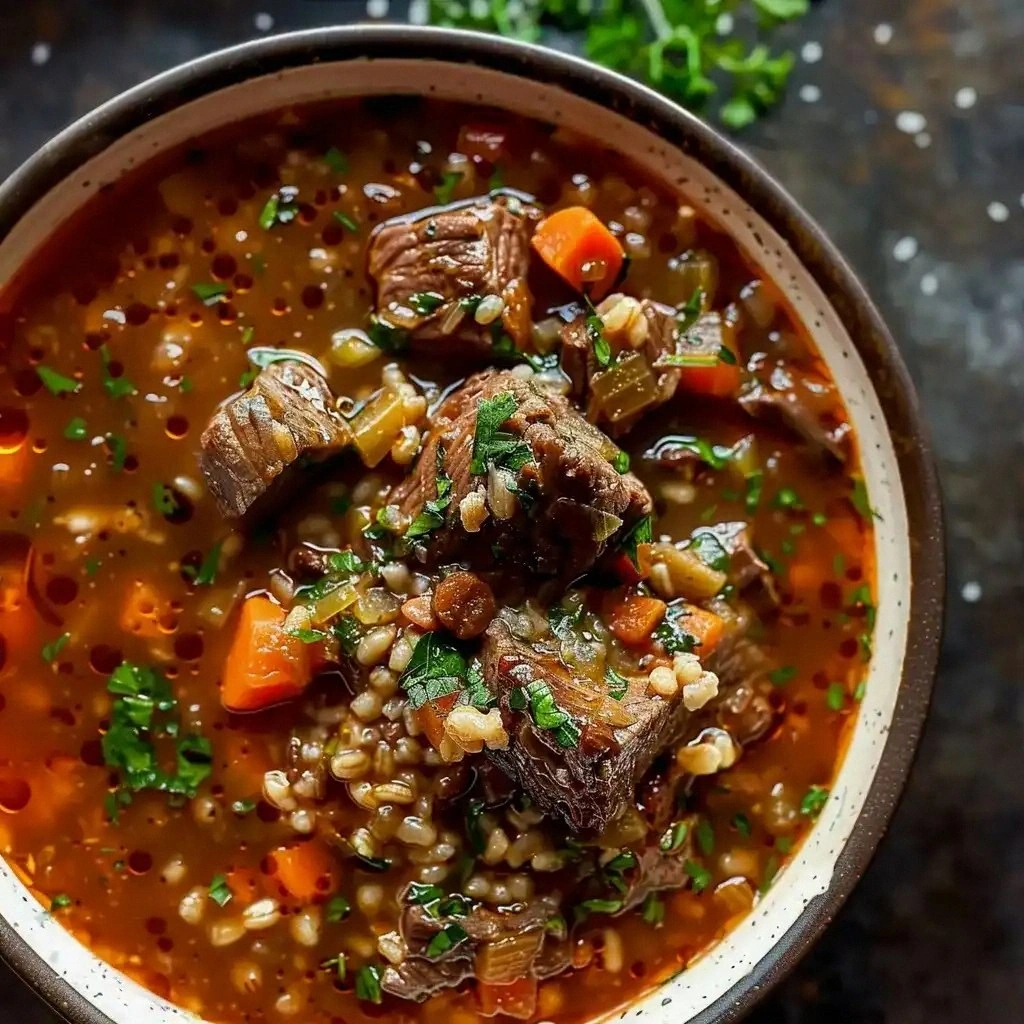
Picture the scene: a golden crust forming on the meat, the deep, earthy scent of thyme and bay leaves wafting through the air, the gentle hiss of onions caramelizing, and the rhythmic thump of the slow cooker’s timer ticking. As the broth simmers, the vegetables soften to tender, translucent perfection, releasing their natural sugars into a broth that thickens into a velvety, savory soup. Every bite is a symphony—savory beef, chewy pearl barley, sweet carrots, crisp celery, and the subtle kick of garlic, all wrapped in a comforting broth that coats the palate like velvet. I dare you to taste this and not go back for seconds; the first spoon will have you declaring it the best version you'll ever make at home.
What makes this version stand out from the countless other slow‑cooker beef and barley soups? First, it’s the deliberate searing of the meat that locks in flavor, a step I almost skipped in the rush of a busy week. Second, the use of pearl barley over rice adds a nutty chew that keeps the soup interesting. Third, the inclusion of a can of diced tomatoes introduces a bright acidity that cuts through the richness without overpowering it. Fourth, the balanced seasoning—bay leaves, thyme, and a pinch of salt and pepper—creates a layered flavor profile that evolves as it cooks. Fifth, the methodical layering of ingredients ensures each component retains its identity while contributing to the whole. And finally, the recipe’s make‑ahead potential turns it into a versatile dish that can be prepared in advance and enjoyed later, making it a staple for any busy household.
Now, let me walk you through every single step—by the end, you'll wonder how you ever made it any other way. From the moment you set the slow cooker to the final ladle of steaming soup, every detail has been honed to bring out the best in each ingredient. Ready? Let’s dive into the heart of the recipe.
What Makes This Version Stand Out
- Taste: The slow sear before simmering locks in deep, caramelized flavors that the broth carries throughout the dish. It’s the difference between a bland stew and a flavor-packed masterpiece.
- Texture: Pearl barley gives a satisfying chew, while the vegetables remain tender without falling apart, creating a comforting yet complex mouthfeel.
- Convenience: A single slow‑cooker setup means you can set it and forget it, freeing up time for other tasks or simply to relax.
- Uniqueness: The addition of diced tomatoes adds a subtle brightness that balances the richness of beef and barley, a twist not found in most traditional recipes.
- Crowd‑Pleaser: Whether you’re feeding a family or a group of friends, the hearty, robust flavors keep everyone coming back for more.
- Ingredient Quality: Using a high‑quality beef chuck roast and fresh vegetables elevates the entire dish, turning humble pantry staples into a gourmet experience.
- Cooking Method: The slow‑cooking process breaks down connective tissue, resulting in melt‑in‑your‑mouth beef without the need for constant monitoring.
- Make‑Ahead Potential: The soup can be prepared a day ahead, flavors deepen overnight, and it reheats beautifully, making it ideal for meal prep.
Alright, let's break down exactly what goes into this masterpiece…
Inside the Ingredient List
The Flavor Base
The foundation of any great soup is its base, and this recipe’s flavor base is a symphony of aromatics that build depth from the first stir. The large onion, diced finely, releases a sweet, mellow sweetness when sautéed, acting as the backbone of the broth. Garlic, minced into small cloves, adds a punch of umami that permeates every spoonful. Bay leaves, two in number, infuse a subtle herbal note that lingers long after you’ve removed them. Dried thyme, a single teaspoon, introduces a warm, slightly floral nuance that balances the earthy tones of beef and barley.
If you’re feeling adventurous, you can add a pinch of smoked paprika to bring a smoky undertone, or a splash of red wine to deepen the flavor profile. Remember, each aromatic is a silent contributor; skip one, and the soup loses a layer of complexity. For the best results, let the aromatics cook until they’re fragrant but not browned—over‑browning can introduce bitterness.
The Texture Crew
Texture is what keeps a soup engaging; this dish’s texture crew includes pearl barley, carrots, celery, and beef. Pearl barley is the star, offering a chewy bite that stands up to the slow cooking process. Carrots, cut into 1‑inch cubes, provide a sweet crunch that softens over time, while celery adds a refreshing, crisp bite that cuts through the richness. The beef chuck roast, cut into 1‑inch cubes, delivers a melt‑in‑your‑mouth tenderness that’s the hallmark of a slow‑cooked dish.
If you prefer a lighter texture, you can reduce the amount of barley or substitute it with quinoa for a different grain profile. Alternatively, for a thicker soup, add a tablespoon of flour or a small amount of cornstarch at the end of cooking to lightly thicken the broth without altering the flavor.
The Unexpected Star
The can of diced tomatoes is the unexpected star that brightens this hearty soup. It adds a subtle acidity that balances the deep, savory flavors of beef and barley. The tomatoes also contribute a natural sweetness and a hint of brightness that prevents the soup from feeling too heavy. If you’re looking for a different twist, replace the diced tomatoes with a can of crushed tomatoes or even a splash of tomato sauce for a richer tomato flavor.
Don’t skimp on the tomatoes; they’re essential for the color, flavor, and balance. A good quality canned tomato will give you a brighter, fresher taste compared to a low‑quality brand that might taste flat.
The Final Flourish
Olive oil is the final flourish that brings everything together. Two tablespoons of extra‑virgin olive oil not only adds a subtle fruity note but also helps the aromatics sauté evenly. It also prevents the beef from sticking to the pan during searing, ensuring a better sear and richer flavor. If you prefer a lighter version, you can use a neutral oil like canola or grapeseed; the flavor will remain the same, but the olive oil adds a depth that is hard to replicate.
Finally, salt and pepper to taste are the finishing touches that bring out the flavors. They’re essential, but because they’re variable, they don’t appear in the ingredient list’s numeric quantities. Remember to season at the end of cooking, as the slow cooker’s environment can dilute the seasoning over time.
Everything's prepped? Good. Let's get into the real action…
The Method — Step by Step
- Start by heating a large skillet over medium‑high heat. Add the two tablespoons of olive oil, allowing it to shimmer but not smoke. Place the cubed beef into the pan in a single layer, ensuring the pieces are not overcrowded. Sear for 2–3 minutes on each side until a deep brown crust forms. This step locks in flavor and gives the broth a rich, caramelized undertone. Once seared, transfer the beef to the slow cooker.
- In the same skillet, add the diced onion and minced garlic. Sauté for 2 minutes until the onion becomes translucent and the garlic releases its aroma. The sizzling sound here is the promise of deliciousness. Add a splash of water or beef broth to deglaze the pan, scraping up all the browned bits—those are packed with flavor. Pour this mixture into the slow cooker, allowing it to mingle with the beef.
- Add the sliced carrots, celery, bay leaves, dried thyme, and the can of diced tomatoes into the slow cooker. The vegetables should be evenly distributed, ensuring each bite contains a balance of flavors. Stir gently to combine all ingredients, making sure the barley sits on top of the liquid so it cooks evenly.
- Pour in the eight cups of beef broth, covering the ingredients by about an inch. Check that the liquid level is sufficient; if not, add a little more broth or water. The broth should be rich and aromatic, ready to transform the ingredients into a comforting soup.
- Cover the slow cooker and set it to low for 8–10 hours, or high for 4–5 hours. The slow, low heat allows the beef to become tender and the barley to absorb the broth’s flavors fully. Avoid lifting the lid during this period; each time you do, you lose precious heat and steam, which can lengthen the cooking time.
- After the cooking time, carefully remove the bay leaves and discard them. Taste the soup and season with salt and pepper to taste. Remember, the flavors will deepen as the soup sits, so it’s okay to add a little extra salt if needed.
- If you prefer a slightly thicker consistency, stir in a tablespoon of flour or a small amount of cornstarch dissolved in a splash of water. Let the soup simmer for an additional 10 minutes to allow the thickener to set.
- Serve hot, ladling generous portions into bowls. Garnish with freshly chopped parsley or a drizzle of olive oil for a touch of color and flavor. Pair it with crusty bread for a complete meal that will have everyone asking for seconds.
That’s it — you did it. But hold on, I've got a few more tricks that'll take this to another level. These insider tips will help you master the dish and avoid common pitfalls.
Insider Tricks for Flawless Results
The Temperature Rule Nobody Follows
While most people set their slow cooker to low, the best results come from a low‑to‑medium setting that allows the broth to gently simmer. This keeps the beef from becoming rubbery and the barley from over‑cooking. If your slow cooker has a “slow‑cook” setting, that’s ideal. Remember, the goal is a slow, steady heat that breaks down connective tissue without boiling the liquid.
Why Your Nose Knows Best
The aroma of a simmering slow cooker is a powerful indicator of progress. When the broth starts to bubble gently and the scent of thyme and garlic fills the kitchen, you’re in the sweet spot. If the aroma is too sharp or the liquid is boiling, lower the heat or cover the lid tighter. Trust your nose; it’s the best guide for when to adjust the cooking time.
The 5‑Minute Rest That Changes Everything
After removing the soup from the slow cooker, let it rest for five minutes before serving. This brief pause allows the flavors to settle and the broth to thicken slightly. It also gives the barley time to absorb the final splash of liquid, ensuring each spoonful is perfectly balanced.
The Quick Salt Trick
Add salt in stages: a pinch after searing the beef, another after the first hour of slow cooking, and a final seasoning at the end. This layered approach prevents the soup from becoming too salty or too bland. If you’re using low‑sodium broth, consider adding a splash of soy sauce or Worcestershire sauce for depth.
The Perfect Garnish
A sprinkle of fresh parsley or a drizzle of good olive oil right before serving adds a burst of color and a fresh flavor that cuts through the richness. If you’re feeling adventurous, a few drops of lemon juice can brighten the dish even further.
Creative Twists and Variations
This recipe is a playground. Here are some of my favorite ways to switch things up:
Spicy Mexican‑Inspired
Add a diced jalapeño and a tablespoon of cumin during the sauté phase. Finish with a splash of lime juice and garnish with cilantro. The heat and citrus give the soup a lively, fiesta‑ready vibe.
Herb‑Infused Mediterranean
Swap bay leaves for oregano and add a handful of chopped spinach in the last 30 minutes of cooking. Top with crumbled feta and a drizzle of olive oil for a Mediterranean twist that’s both hearty and fresh.
Vegetarian Barley Stew
Replace the beef with a mix of mushrooms and tofu cubes. Use vegetable broth instead of beef broth and add a splash of soy sauce for umami. The result is a satisfying, plant‑based version that still delivers on flavor.
Asian‑Inspired Pho‑Style
Add star anise, cinnamon stick, and a sliced piece of ginger during the simmering phase. Replace the barley with rice noodles and finish with fresh basil, lime wedges, and bean sprouts. The broth takes on a fragrant, aromatic character reminiscent of pho.
Crispy Bacon Garnish
Crisp a few strips of bacon and crumble them over the soup before serving. The smoky crunch contrasts beautifully with the tender barley and adds a savory depth that’s hard to resist.
Coconut‑Creamed Variation
Stir in a cup of coconut milk during the last 20 minutes of cooking. This adds a creamy, tropical flavor that pairs wonderfully with the beef and barley. Garnish with toasted coconut flakes for an extra touch.
Storing and Bringing It Back to Life
Fridge Storage
Cool the soup to room temperature before refrigerating. Transfer it to an airtight container and store for up to four days. The flavors continue to meld, making it even more delicious the next day.
Freezer Friendly
For longer storage, portion the soup into freezer‑safe containers. It will keep for up to three months in the freezer. When ready to eat, thaw overnight in the refrigerator, then reheat on the stove or in a microwave.
Best Reheating Method
Reheat gently on low heat, stirring occasionally. Add a splash of water or broth if the soup has thickened. A tiny splash of water before reheating steams the soup back to perfection, restoring its silky texture.