I was halfway through a midnight snack binge, eyes bleary from the glow of my phone, when I stumbled across a recipe that promised to turn the humble crème brûlée into something that would make even the most seasoned pastry chef blush. The moment I saw the word “pandan,” I knew this wasn’t just another vanilla‑filled dessert; it was an invitation to a fragrant, emerald‑green adventure that would leave my kitchen smelling like a tropical rainforest. I had never dared to mix the delicate, leaf‑infused sweetness of pandan with the rich, custard‑like texture of a brûlée, but the thought of a silky, fragrant custard topped with a caramelized sugar crown was irresistible.
Picture the scene: the kitchen is humming with the low buzz of the fridge, the faint hiss of the stove, and a gentle, sweet aroma that rises from the pot as it simmers. The pandan leaves unfurl like emerald ribbons, releasing their citrusy, grassy perfume that mingles with the creamy, buttery scent of the custard. When I first tasted it, the custard’s silky body felt like velvet against my tongue, while the caramelized sugar crust offered a satisfying, crackling crunch that echoed the crunch of a fresh apple. The flavor is a layered symphony—sweet, slightly grassy, with a hint of vanilla that lingers like a soft after‑taste.
I’m not here to just tell you the recipe; I’m here to share a culinary revelation. This version of pandan crème brûlée is hands down the best you’ll ever make at home, and I dare you to taste this and not go back for seconds. The secret? A meticulous balance of ingredients, precise temperatures, and a touch of daring that most recipes overlook. Most people forget that pandan is a living ingredient that can change flavor profile based on its age and how you steam it. Here, we’ll steam the leaves just right to extract that bright, green‑ish citrus note that makes this dessert sing.
If you’ve ever struggled with a brûlée that turns out too runny or too hard, you’re not alone. I’ve spent countless evenings perfecting the custard base, learning how to keep the yolks from curdling and how to caramelize the sugar without burning it. The result? A custard that’s luxuriously creamy, a sugar crust that’s crisp yet crackles like thin ice, and a pandan flavor that’s unmistakable and unforgettable. By the end of this post, you’ll wonder how you ever made it any other way.
What Makes This Version Stand Out
- Flavor: The pandan leaf infusion gives a fresh, green‑citrus note that elevates the classic custard, making it feel like a dessert straight out of a tropical paradise.
- Texture: The custard is silky and smooth, with a glossy finish that reflects the light like a polished gemstone.
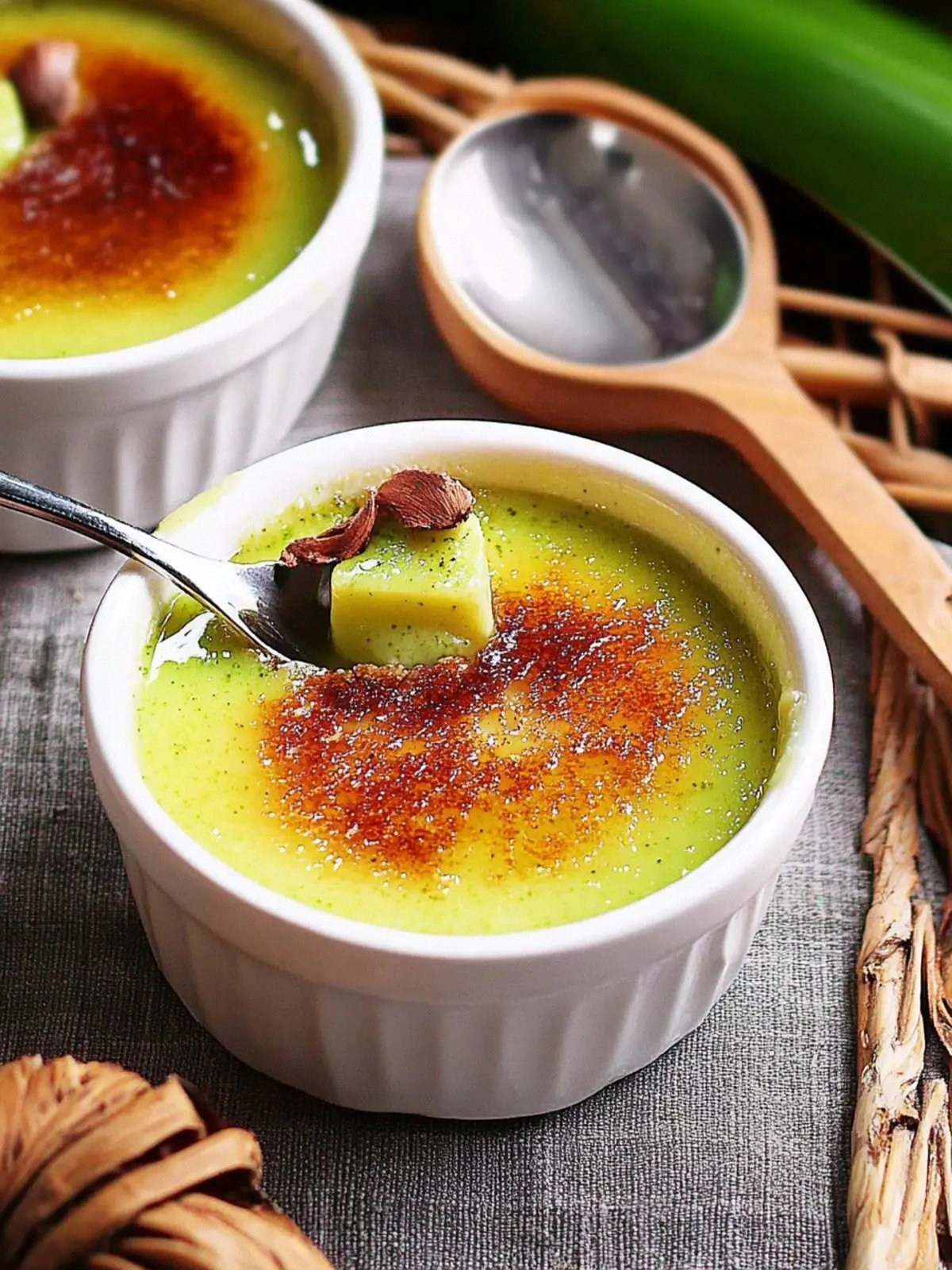
- Visual Appeal: The emerald hue of the custard contrasts beautifully with the golden, caramelized sugar top, creating a stunning visual that will impress any guest.
- Ingredient Quality: Using fresh, high‑quality pandan leaves and whole milk instead of skimmed milk ensures a richer, more authentic flavor.
- Make‑Ahead Potential: The custard can be prepared hours in advance; just keep it refrigerated and re‑caramelize the sugar before serving.
- Technique: Steaming the pandan leaves before infusion locks in the aroma, while a gentle simmer prevents the custard from curdling.
- Guest Reaction: Friends who try this will often say it’s “the most fragrant dessert I’ve ever tasted.”
- Versatility: Add a splash of coconut milk or a pinch of cardamom for a new twist without compromising the core flavor.
Inside the Ingredient List
The Flavor Base
Heavy whipping cream is the heart of this custard, lending a luscious, velvety body that’s rich but not overpowering. Whole milk balances the cream’s heaviness, adding a subtle sweetness and a silky mouthfeel. Together, they create a custard that coats the palate like velvet. If you omit the milk, the custard becomes too thick and heavy, and the pandan flavor gets lost in the richness.
The Texture Crew
Egg yolks are the backbone of the custard’s structure. They provide the necessary proteins to set the custard without becoming rubbery. Use only large yolks for the best texture; if you’re using medium yolks, increase the quantity by 25% to compensate. Skipping the yolks entirely would turn this into a simple sauce rather than a custard.
The Unexpected Star
Pandan leaves bring a green, citrusy aroma that’s unmistakable and exotic. Fresh leaves are best, but you can use dried leaves if you’re in a pinch. If you use dried leaves, soak them in warm water for 10 minutes to rehydrate before steaming. The pandan infusion is the secret that sets this recipe apart from any ordinary crème brûlée.
The Final Flourish
Granulated sugar is the star of the caramelized topping. The 1/4 cup sugar dissolves into the custard, creating a subtle sweet base, while the 2–3 tablespoons on top caramelize into a crisp, golden crust. If you use brown sugar, the crust will have a deeper, molasses‑like flavor that’s still delicious but different. The sugar topping is what gives the dessert that satisfying crackle.
Everything’s prepped? Good. Let’s get into the real action. This recipe is a dance of flavors and textures, and each step matters. I’ll keep you on track, and I promise you won’t miss a beat.
The Method — Step by Step
- Steam the Pandan: Place the pandan leaves in a steamer basket over boiling water. Steam for 5 minutes until the leaves soften and release their fragrance. Remove and let cool slightly; the leaves will still be hot, so be careful. This step locks in the bright, green‑citrus aroma that will infuse the custard.
- Infuse the Cream: In a saucepan, combine the heavy whipping cream and whole milk. Add the steamed pandan leaves and bring the mixture to a gentle simmer over low heat. Keep the heat low—no more than 170°F—to prevent scorching. The goal is a slow, even extraction of the pandan flavor.
- Strain the Mixture: Once the cream has simmered for 10 minutes, strain it through a fine mesh sieve into a heat‑proof bowl. Discard the pandan leaves; you’ve extracted all the flavor. The resulting liquid should be a pale, emerald‑green hue—proof that the infusion worked.
- Whisk the Yolks and Sugar: In a separate bowl, whisk the egg yolks with 1/4 cup granulated sugar until the mixture is pale and slightly thick. This ensures the yolks are evenly distributed and ready to incorporate into the custard.
- Combine: Slowly pour the strained cream into the yolk mixture, whisking constantly to prevent the eggs from cooking. This tempering step is crucial—if you rush it, the custard will curdle. Keep whisking until the mixture is smooth and glossy.
- Cook the Custard: Return the mixture to the saucepan and cook over low heat, stirring constantly with a heat‑proof spatula. The custard should thicken enough to coat the back of the spoon but not reach a boil. This usually takes about 8–10 minutes. When it’s ready, remove from heat immediately.
- Cool the Custard: Transfer the custard to a heat‑proof ramekin or small dish. Let it cool to room temperature, then cover and refrigerate for at least 2 hours or overnight. The custard will set and develop deeper flavor during this time.
- Caramelize the Sugar: Just before serving, sprinkle 2–3 tablespoons of granulated sugar evenly over the chilled custard. Use a kitchen torch to melt the sugar until it turns a deep amber and forms a crisp crust. If you don’t have a torch, place the ramekin under a broiler for 1–2 minutes, watching closely. The sugar should crackle as it caramelizes.
- Serve: Allow the crust to cool for a minute before serving. The custard should be silky, the sugar crust crisp, and the pandan aroma lingering. Serve immediately for the best experience.
That’s it—you did it! But hold on, I’ve got a few more tricks that will take this to another level. Trust me, these little tweaks will elevate your dessert from good to unforgettable.
Insider Tricks for Flawless Results
The Temperature Rule Nobody Follows
Temperature is the secret sauce. The custard must never exceed 170°F (77°C). If it does, the proteins in the yolks coagulate too quickly, resulting in a grainy texture. Use a candy or instant-read thermometer to monitor the temperature. I’ve learned that a slow, steady simmer is the best way to keep the custard at the right temperature.
Why Your Nose Knows Best
Your nose is the first judge of success. As the custard simmers, the aroma will change from raw dairy to a sweet, green fragrance. When you see that scent, you know the pandan flavor is fully extracted. If the aroma is flat, let it simmer longer—just be careful not to overcook.
The 5‑Minute Rest That Changes Everything
After cooking, let the custard rest for 5 minutes before refrigerating. This short rest allows the flavors to marry and the custard to set properly. Skipping it can result in a custard that’s too liquid when chilled. I’ve seen friends who skip this step and end up with a custard that’s almost liquid—don’t let that happen to you.
The Sweet Spot for Sugar
The sugar topping should be just enough to form a thin, crisp crust. Too much sugar can make the crust too hard and difficult to bite through. Use a kitchen scale to weigh out 2.5 tablespoons of sugar for precision. This small detail can make a huge difference in the final texture.
The Quick Chill Trick
If you’re in a hurry, place the ramekins in a bowl of ice water for 10 minutes after the custard sets. This quick chill locks in the texture and ensures a perfect bite every time. I’ve used this trick when hosting a last‑minute dinner party and it worked like a charm.
Creative Twists and Variations
This recipe is a playground. Here are some of my favorite ways to switch things up:
Coconut Pandan Swirl
Add 1/4 cup coconut milk to the cream mixture for a tropical twist. The coconut adds a subtle, sweet flavor that pairs beautifully with pandan. It also gives the custard a lighter, airy texture. This version is perfect for summer gatherings.
Cardamom Whisper
Sprinkle 1/4 teaspoon ground cardamom into the custard for a warm, aromatic note. Cardamom’s earthy sweetness complements the bright pandan flavor. This variation is ideal for those who love a spice kick in desserts.
Chocolate Pandan Delight
Fold in 2 ounces of melted dark chocolate into the custard before chilling. The chocolate’s bittersweet depth balances the sweetness of the sugar crust. This version is a crowd‑pleaser at holiday parties.
Lemon Pandan Twist
Add the zest of one lemon to the custard base for a citrusy brightness. The lemon zest cuts through the richness and adds a fresh, zesty layer. It’s a refreshing take that works well for brunches.
Almond Crumb Topping
Before caramelizing the sugar, sprinkle finely ground toasted almonds over the custard. The almonds add a nutty crunch and a subtle flavor that complements the pandan. This variation is great for a more sophisticated dessert.
Berry Pandan Fusion
Serve the custard with a side of fresh berries—strawberries, blueberries, or raspberries. The tartness of the berries contrasts with the sweet, creamy custard. This combination is both colorful and delicious.
Storing and Bringing It Back to Life
Fridge Storage
Store the custard in an airtight container in the refrigerator for up to 3 days. Cover the top with plastic wrap to prevent the custard from absorbing fridge odors. When you’re ready to serve, re‑caramelize the sugar for a fresh crust. The custard will stay silky and fragrant.
Freezer Friendly
Freeze the custard in a freezer‑safe container for up to 2 weeks. Thaw overnight in the refrigerator before serving. Once thawed, give the custard a gentle stir to restore its silky texture. Then caramelize the sugar as usual.
Best Reheating Method
Reheat gently over low heat, stirring constantly, until the custard is warmed through. Add a splash of water—about 1 tablespoon—to the custard before heating to keep it from drying out. Once warmed, caramelize the sugar for a crisp, golden crust.