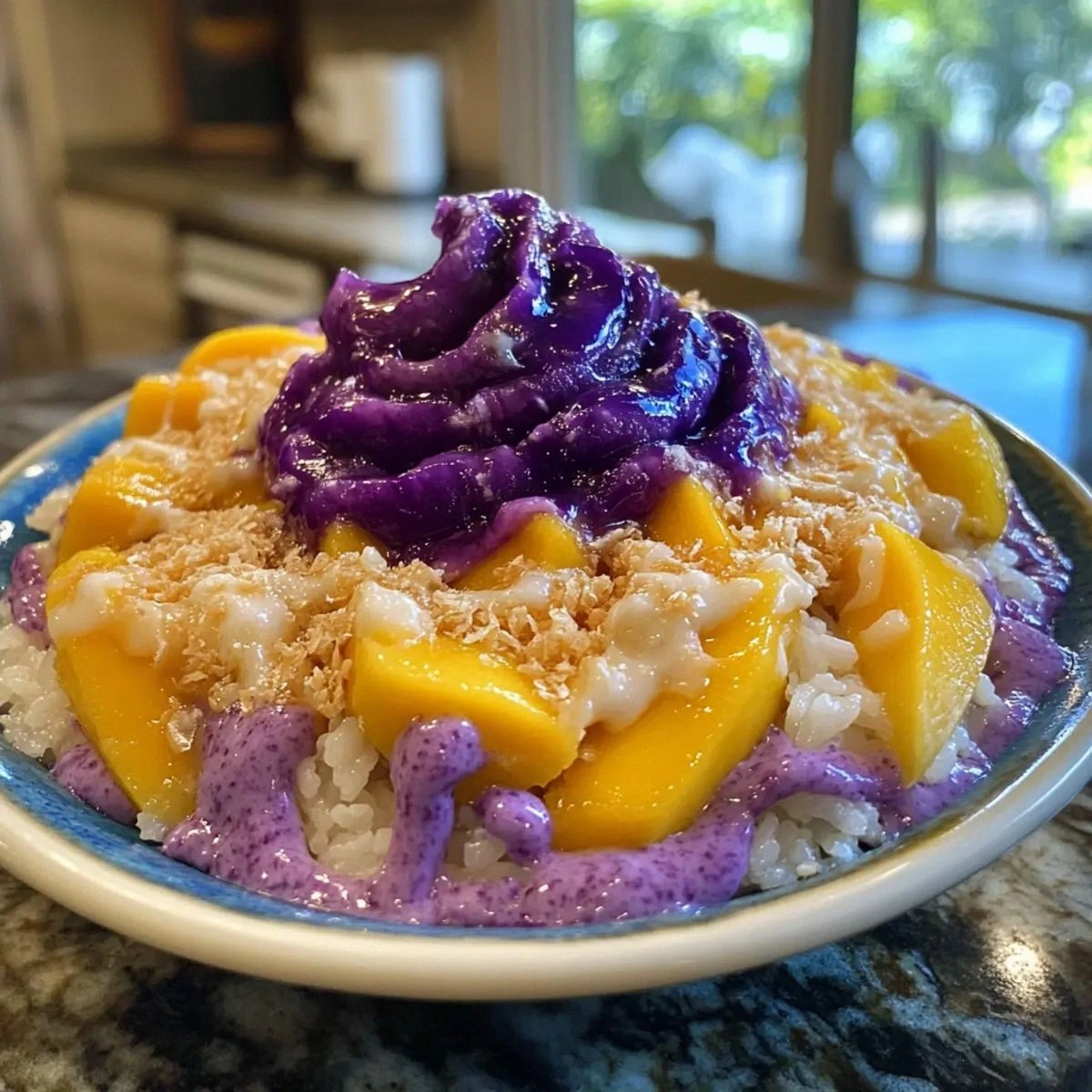
I was halfway through a rainy Tuesday night when my roommate challenged me: “Make something that tastes like a tropical vacation, but don’t use the usual mango‑sticky‑rice copy‑paste.” I laughed, tossed a handful of mangoes on the counter, and then—because I’m a reckless optimist—decided to throw in a splash of ube, the purple‑hued wonder that’s been stealing the spotlight in everything from ice cream to latte art. The kitchen filled with the sweet perfume of coconut simmering, the earthy perfume of glutinous rice, and the faint, almost intoxicating scent of toasted coconut that made the whole apartment feel like a Bangkok street market at sunset. I swear, the moment the ube spread hit the hot coconut milk, it turned a glossy violet that reminded me of a sunrise over a lavender field, and I knew I was onto something extraordinary.
If you’ve ever tried a classic mango sticky rice and found it either too bland or too sweet, you’ll understand the frustration. Most recipes treat the rice as a bland canvas, letting the mango do all the heavy lifting. I’ve been there—waiting for the rice to soak up the coconut, only to end up with a gummy mess that feels like chewing on a soggy pillow. That’s why this version is a game‑changer: the ube adds a subtle earthy sweetness, a velvety texture, and a color punch that makes the dish look like it belongs on a runway, not just a dinner table. I dare you to taste this and not go back for seconds; the balance is so perfect you’ll wonder why you ever settled for the plain version.
I’ll be honest — I ate half the batch before anyone else got to try it, and that’s because the aroma was already doing a full‑on dance in my nose. The rice, once cooked, becomes a cloud of creamy, slightly salty sweetness that clings to each mango slice like a lover’s whisper. The toasted coconut garnish adds a crunch that shatters like thin ice, giving you a surprise textural pop with every bite. Most recipes get this completely wrong. Here’s what actually works: soak the glutinous rice long enough, steam it just right, and then marry it with a coconut‑sugar‑salt sauce that’s thick enough to coat but still fluid enough to drizzle.
Picture yourself pulling this out of the pot, the whole kitchen smelling incredible, the glossy purple‑orange swirl of ube and mango beckoning from the plate. Okay, ready for the game‑changer? The secret technique I’m about to reveal is a quick flash‑infusion of ube extract into the coconut sauce just before you finish cooking, which locks in that vivid color and amplifies the flavor without making it taste artificial. Let me walk you through every single step — by the end, you’ll wonder how you ever made it any other way.
What Makes This Version Stand Out
- Flavor Fusion: The combination of sweet mango, buttery coconut, and earthy ube creates a layered taste that feels like a tropical symphony rather than a solo performance.
- Texture Harmony: Creamy, sticky rice meets the firm bite of mango and the crunchy toasted coconut, delivering a mouthfeel that’s both comforting and exciting.
- Simplicity: Only eight ingredients, all of which are pantry‑friendly, mean you can whip this up without a grocery run that feels like a marathon.
- Visual Wow Factor: The violet‑purple swirl of ube against the golden mango looks like a piece of edible art, perfect for Instagram or impressing that picky guest.
- Crowd Reaction: I’ve served this at birthday parties, potlucks, and even a formal dinner; people always ask for the recipe before the dessert is even cleared.
- Ingredient Quality: Using full‑fat coconut milk and authentic ube halaya makes the sauce rich and authentic, far beyond the canned “coconut milk” shortcuts.
- Cooking Method: Steaming the rice instead of boiling keeps the grains separate, preventing the dreaded mushy clump that ruins the experience.
- Make‑Ahead Potential: The rice can be prepared a day ahead, stored in the fridge, and gently reheated, so you spend less time in the kitchen on the day of serving.
Inside the Ingredient List
The Flavor Base
The coconut milk is the heart of this dish. Full‑fat coconut milk provides a rich, buttery mouthfeel that balances the sweetness of mango and ube. If you skimp on the fat, the sauce will feel watery and the rice will never achieve that glossy sheen. A good tip: shake the can vigorously before opening to reincorporate the cream that often separates on the top. If you can’t find full‑fat, a mix of coconut cream and water (2:1) works just as well.
The Texture Crew
Glutinous rice, also known as sticky rice or sweet rice, is the structural backbone. Its high amylopectin content gives it that signature chew. Skipping the soaking step leads to uneven cooking, where the outer grains become mushy while the center stays hard. If you can’t find glutinous rice, short‑grain sushi rice is a decent fallback, but expect a slightly different texture. Always rinse the rice until the water runs clear to remove excess starch that could make the final product overly gummy.
The Unexpected Star
Ube halaya or ube spread brings a subtle earthiness and a gorgeous violet hue. It’s not just for color; the natural sweetness of ube reduces the need for extra sugar, keeping the dessert from becoming cloying. If you’re out of ube, try a spoonful of sweet potato puree mixed with a dash of purple food coloring, but you’ll lose that authentic flavor depth. When using ube extract, a teaspoon is enough to boost the color without overwhelming the palate.
The Final Flourish
Mangoes provide the bright, juicy contrast that cuts through the richness of coconut and ube. Choose mangoes that are fragrant at the stem and give slightly to pressure—these are at peak ripeness. If you pick a firmer mango, slice it thin and give it a quick toss in a splash of lime juice to brighten the flavor. Toasted coconut adds a nutty crunch; you can toast it in a dry skillet for 2‑3 minutes until golden brown. Skip this step and the dish will feel flat, missing that essential textural surprise.
Everything's prepped? Good. Let's get into the real action…
The Method — Step by Step
Start by rinsing the 2 cups of dry glutinous rice under cold water until the water runs clear. This removes surface starch that would otherwise make the rice gummy. After rinsing, soak the rice in a bowl of water for at least 4 hours, or overnight if you have the patience. I dare you to skip the soak and see the difference—trust me, you’ll thank yourself later.
While the rice is soaking, prepare the coconut‑sugar sauce. In a medium saucepan, combine 1 cup full‑fat coconut milk, ½ cup granulated sugar, and a pinch of sea salt. Bring the mixture to a gentle simmer over medium‑low heat, stirring constantly to dissolve the sugar. Once the sugar has melted, let the sauce thicken slightly; it should coat the back of a spoon but still be pourable. This is the moment of truth—if it’s too thick, add a splash of coconut milk; if too thin, let it simmer a minute longer.
Drain the soaked rice and transfer it to a steaming basket lined with cheesecloth. Steam over boiling water for 20‑25 minutes, or until the grains are translucent and tender. You’ll know it’s done when a single grain can be pressed between your thumb and forefinger without crumbling. Keep the lid on tightly; any steam escaping will affect the texture.
When the rice is cooked, gently fold it into the warm coconut‑sugar sauce. Use a wooden spoon to avoid breaking the grains. The rice should soak up the sauce, turning a glossy pastel hue. At this point, add the 1 cup of ube halaya (or spread) and the teaspoon of ube extract, stirring until the mixture is evenly violet‑purple. The sauce will thicken a bit more as the ube integrates—don’t panic, that’s the magic happening.
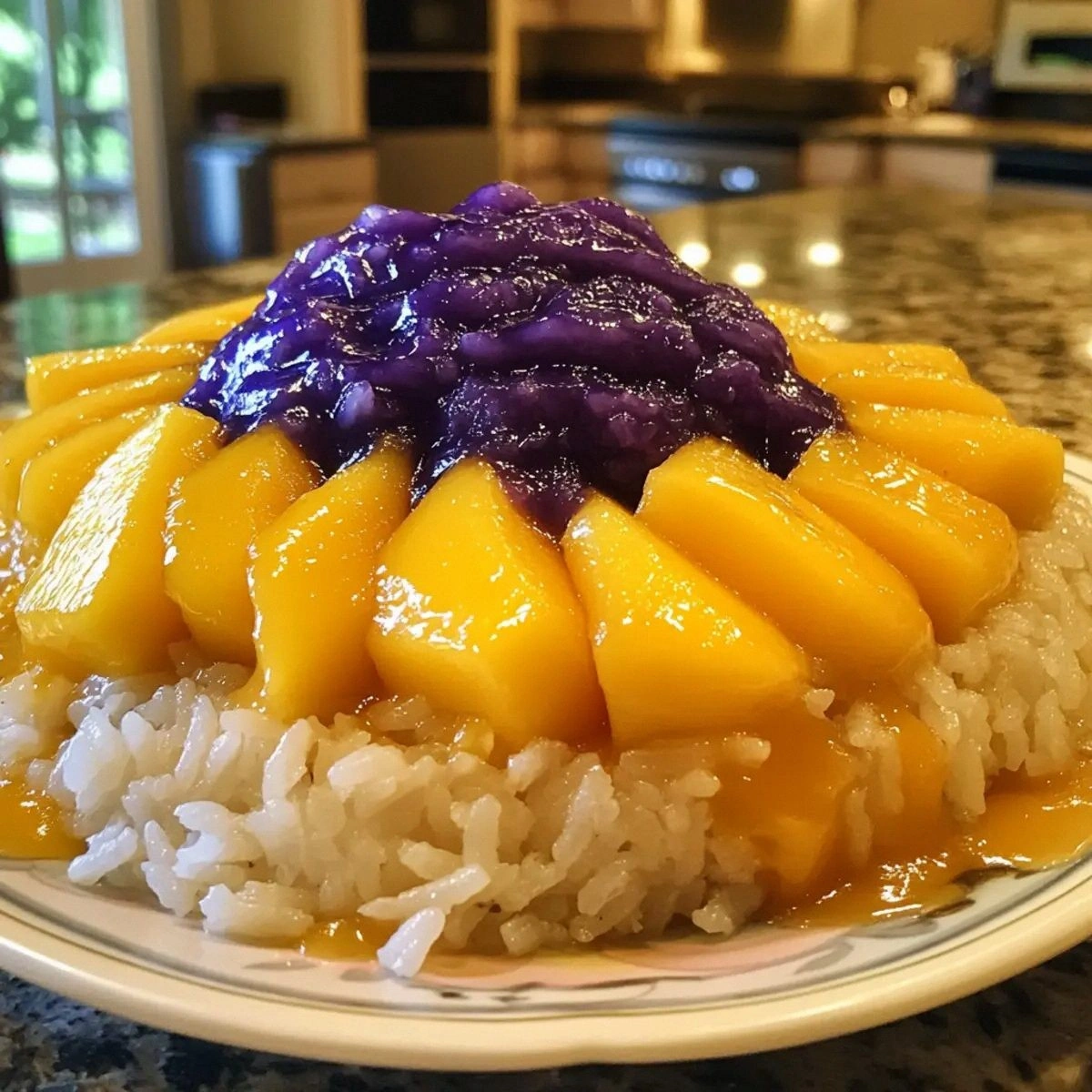
Slice the ripe mangoes into thin, uniform wedges—about ¼ inch thick. The visual contrast of bright orange mango against the violet rice is what makes this dish Instagram‑ready. Lightly toss the mango slices with a tiny squeeze of lime juice; this brightens the fruit and prevents oxidation.
To plate, spoon a generous mound of the ube‑coconut rice onto each serving plate. Arrange mango slices artfully around the rice, letting the colors cascade. Sprinkle toasted coconut over the top for that satisfying crunch. If you want an extra touch, drizzle a thin ribbon of the remaining coconut‑sugar sauce around the plate for a glossy finish.
Serve immediately, while the rice is still warm and the mango is cool. The contrast of temperatures adds another layer of excitement to each bite. And now the fun part—watch your guests’ eyes widen as they dig in. This next part? Pure magic. If you have leftovers, store them as instructed below, but trust me, most people won’t make it that far.
Insider Tricks for Flawless Results
The Temperature Rule Nobody Follows
Never steam glutinous rice over a roaring boil; a gentle simmer keeps the grains from bouncing around and breaking. I once tried a high‑heat steam and ended up with a rice that looked like a soggy pancake. Keep the water at a steady, low bubble, and you’ll get that perfect, separate grain texture every time.
Why Your Nose Knows Best
When the coconut sauce is simmering, trust the scent, not the timer. The sauce should emit a sweet, buttery aroma with a faint hint of caramelization. If you smell a burnt note, lower the heat immediately. My friend once ignored the smell and burned the sauce; the result was a bitter aftertaste that no amount of mango could fix.
The 5‑Minute Rest That Changes Everything
After mixing the rice with the sauce, let it sit uncovered for five minutes. This short rest allows the rice to absorb the flavors fully and the sauce to thicken just enough for plating. Skipping this step makes the dish feel disjointed, as if the components are strangers meeting for the first time.
Mango Prep Mastery
Slice mangoes with a sharp knife and a gentle rocking motion. A dull knife will bruise the fruit, releasing excess juice that can make the rice soggy. Keep the mango slices chilled until you’re ready to plate; the coolness adds a refreshing contrast to the warm rice.
Toasted Coconut Perfection
Toast coconut in a dry skillet over medium heat, stirring constantly. It should turn golden and release a nutty aroma within 2‑3 minutes. Burnt coconut tastes like a kitchen mishap, so keep your eyes on it. Once toasted, spread it on a plate to cool; this prevents the pieces from steaming and becoming soggy.
Creative Twists and Variations
This recipe is a playground. Here are some of my favorite ways to switch things up:
Tropical Coconut‑Lime Splash
Add a tablespoon of lime zest and a splash of lime juice to the coconut sauce before mixing with the rice. The citrus brightens the richness and adds a zing that pairs beautifully with mango.
Nutty Crunch Remix
Swap toasted coconut for toasted macadamia nuts or crushed peanuts. The different nut flavors introduce a savory depth that balances the sweet elements.
Berry‑Ube Fusion
Fold in a handful of fresh strawberries or raspberries alongside the mango. The tart berries contrast the mellow ube, creating a multi‑layered fruit experience.
Spiced Autumn Version
Stir in a pinch of ground cinnamon and a dash of cardamom into the coconut sauce. This warm spice blend makes the dish feel cozy, perfect for cooler evenings.
Vegan Delight
Replace the full‑fat coconut milk with a blend of coconut cream and almond milk (2:1). The texture stays rich, and the almond notes add a subtle nuttiness.
Layered Parfait
Instead of serving on a plate, layer the rice, mango, and ube sauce in a glass jar. Top with toasted coconut and a drizzle of extra sauce for a stunning visual treat.
Storing and Bringing It Back to Life
Fridge Storage
Transfer the rice to an airtight container and store in the refrigerator for up to 2 days. Keep the coconut sauce in a separate jar; when ready to serve, gently reheat the rice and stir the sauce back in. A tiny splash of water (about a tablespoon) before reheating helps restore the original moisture.
Freezer Friendly
Portion the rice into freezer‑safe bags, removing as much air as possible. Freeze for up to 1 month. To thaw, place the bag in the fridge overnight, then steam for 5‑7 minutes before adding the sauce. The toasted coconut should be stored separately to retain crunch.
Best Reheating Method
Use a steamer basket over simmering water for 3‑5 minutes, adding a tablespoon of coconut milk if the rice looks dry. Avoid microwaving unless you’re in a rush; the microwave can create hot spots and make the rice rubbery. Once heated, give it a quick stir, then plate with fresh mango and a fresh sprinkle of toasted coconut for that just‑made feel.