I still remember the first time I tried to recreate Olive Garden's ravioli carbonara at home. I was convinced I could nail it on the first try — how hard could it be, right? Thirty minutes later, my kitchen looked like a crime scene: egg yolks scrambled into rubbery bits, cream sauce broken into greasy puddles, and a pot of overcooked ravioli that resembled sad little dumplings. My dinner guests politely picked at their plates while I contemplated ordering pizza. That disaster haunted me for months until I finally cracked the code on what makes this dish so ridiculously addictive.
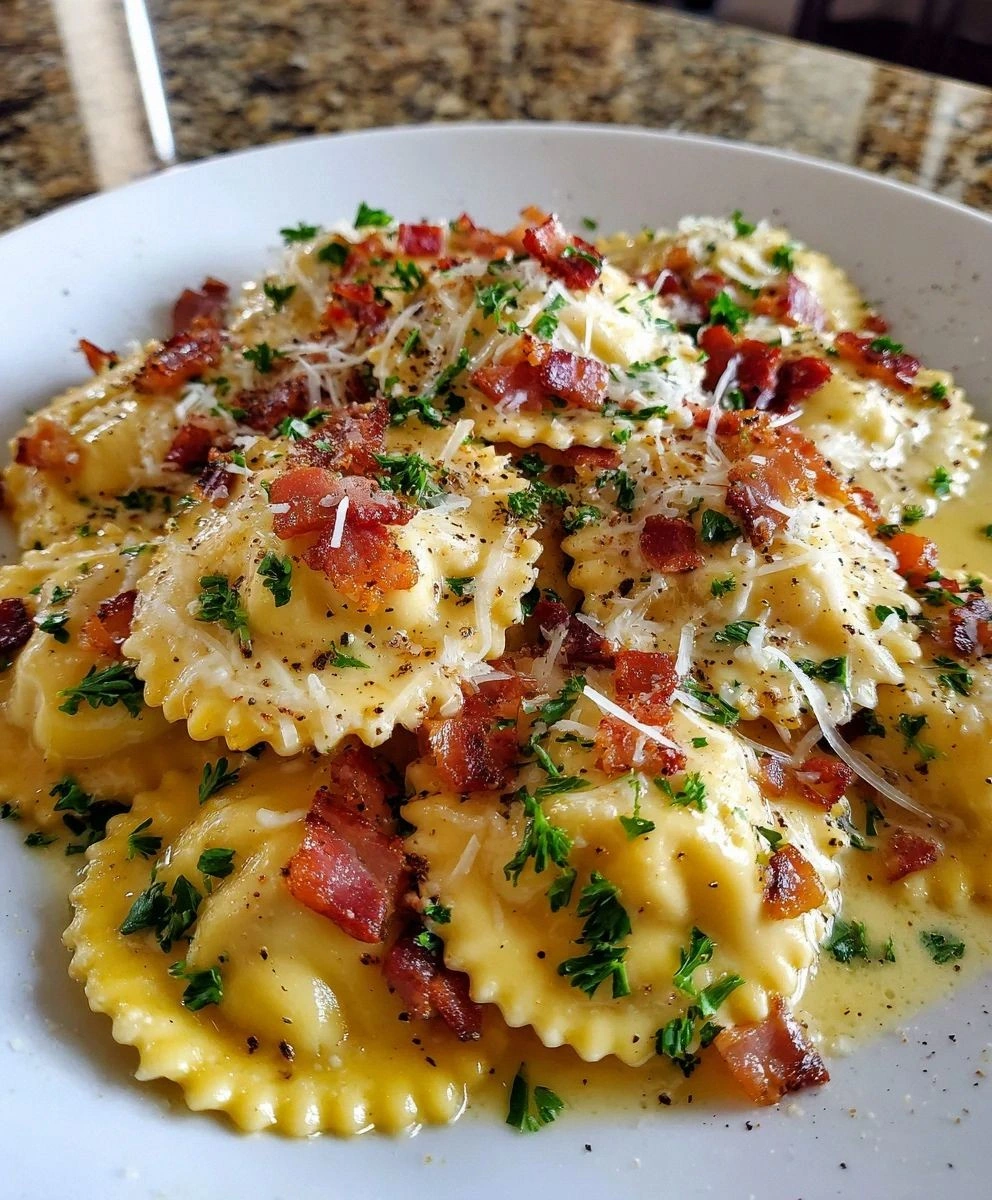
Picture this: tender cheese ravioli swimming in a sauce that's so silky it coats each piece like liquid velvet, punctuated by crispy bacon that shatters between your teeth and releases smoky pork magic into every bite. The cream sauce clings to the pasta's ridges while Parmesan melts into salty, nutty ribbons that stretch luxuriously with each fork-twirl. That first mouthful hits you with richness, then the garlic sneaks in, followed by the pepper's gentle heat — it's like a flavor symphony that builds to a crescendo with every bite.
After eighteen months of obsessive testing (my neighbors started hiding when they saw me coming with taste-testing samples), I've finally perfected a version that makes the restaurant's taste like cafeteria food. The secret lies in three game-changing techniques that nobody else seems to talk about: temperature control so precise it would make a chemist proud, timing that creates sauce nirvana instead of scrambled egg disaster, and a bacon-cooking method that creates the most impossibly crispy edges while keeping the inside tender. I dare you to taste this and not go back for thirds — yes, thirds, because seconds are a given.
Let me walk you through every single step — by the end, you'll wonder how you ever made it any other way.
What Makes This Version Stand Out
Velvet-Smooth Sauce: Most recipes throw everything together and hope for the best, but I've discovered the exact temperature where egg yolks emulsify into cream without scrambling. The result is a sauce so smooth it makes regular Alfredo taste like wallpaper paste. You'll literally watch the transformation happen in your pan — it's like kitchen magic that actually works.
Triple-Threat Bacon Technique: Instead of just frying bacon, we render it low and slow until the fat melts into liquid gold, then crank up the heat for the final two minutes to create shatteringly crisp edges. This method gives you both the rendered fat for cooking and bacon bits that stay crispy even after bathing in cream sauce. Most recipes get this completely wrong and end up with either rubbery bacon or burnt bits.
Ravioli as Flavor Sponges: Those little pasta pillows aren't just convenient — they're perfect sauce absorbers. When cooked properly (and I'll show you exactly how), they puff up like tiny balloons and soak in all that carbonara goodness. Each ravioli becomes a flavor bomb waiting to explode in your mouth.
One-Pan Wonder: Despite tasting like you spent hours slaving away, this entire dish comes together in one skillet. No separate pots for pasta, no straining, no juggling multiple timers. Everything builds layers of flavor in the same pan, which means less cleanup and more concentrated taste. If you've ever struggled with multi-pot recipes, you're not alone — and I've got the fix.
Restaurant-Quality Timing: The sequence matters more than you think. By adding ingredients in a specific order with precise timing, we build flavor depth that usually takes hours to develop. This isn't just throwing stuff in a pan — it's orchestrated cooking that creates complexity from simple ingredients.
Make-Ahead Friendly: Unlike traditional carbonara that turns into a gloopy mess when reheated, this version keeps beautifully for up to three days. The ravioli structure holds up better than spaghetti, and the sauce reheats like a dream with my special technique. Picture yourself pulling this out of the oven, the whole kitchen smelling incredible, even on a Tuesday night when you prepped it on Sunday.
Inside the Ingredient List
The Flavor Base
Cheese ravioli forms the heart of this dish, and not all ravioli are created equal. Fresh ones from the refrigerated section have thinner pasta that cooks faster and absorbs sauce better than their frozen counterparts, but frozen works beautifully if that's what you can find. The key is avoiding the giant family-size bags that are often over-stuffed with dry filling — you want ravioli where the pasta-to-filling ratio lets the sauce shine through. If you can only find meat-filled versions, they'll work, but the delicate cheese flavor is what makes this taste like the restaurant version.
Bacon isn't just a topping here — it's the foundation of the entire flavor profile. Regular thick-cut bacon gives you the best balance of meaty texture and fat rendering, but I've also used pancetta when feeling fancy. Turkey bacon works if you must, but you'll need to add two tablespoons of butter to compensate for the missing fat. The bacon's natural smokiness infuses every bite, so don't even think about skipping it unless you want bland disappointment on a plate.
The Texture Crew
Heavy cream is non-negotiable for that luxurious mouthfeel that makes restaurant carbonara so irresistible. Half-and-half will give you a thinner sauce that pools pathetically in the bottom of your bowl, while whole milk breaks into a curdled mess that looks like something went very wrong. The cream's fat content is what carries all those flavors and creates that velvety texture that clings to every ravioli. You can use half-and-half if you're watching calories, but know you're making a sacrifice in the texture department.
Parmesan cheese needs to be the real deal — none of that powdered stuff in a green can. Freshly grated Parmigiano-Reggiano melts smoothly into the sauce and adds that nutty, salty complexity that makes people close their eyes in food bliss. Pre-grated cheese often contains cellulose that prevents smooth melting, leaving you with grainy sauce that feels like wet sand in your mouth. If you can't find good Parmesan, Pecorino Romano brings a sharper, more aggressive flavor that works beautifully with the bacon's richness.
The Unexpected Star
Egg yolks are where the magic happens — they're the secret ingredient that transforms cream into something transcendent. The trick lies in adding them at exactly the right moment when the pan is warm enough to thicken but not hot enough to scramble. This is where most home cooks panic and either add them too early (scrambled eggs carbonara) or too late (soup city). The yolks create an emulsion that binds everything together into sauce nirvana, and once you see it happen, you'll understand why this dish is worth the effort.
The Final Flourish
Fresh garlic makes all the difference between "meh" and "wow, what is that amazing smell?" Garlic powder works in a pinch, but fresh garlic releases aromatic oils that bloom in the bacon fat and create layers of flavor you can't get from a jar. One clove is enough — you're not trying to ward off vampires here, just adding depth. Mince it super fine so it disappears into the sauce but leaves its flavor fingerprint everywhere.
Black pepper seems basic, but it's crucial for the authentic carbonara experience. Freshly cracked peppercorns release oils that pre-ground pepper lost months ago, and those oils carry flavor compounds that interact with the fat in magical ways. Don't be shy — this dish should have a noticeable pepper kick that balances all that richness.
The Method — Step by Step
Start with a cold skillet and add your chopped bacon — this is crucial for proper fat rendering. Turn the heat to medium-low and let it cook slowly for about 8 minutes, stirring occasionally. You'll watch the fat slowly melt out while the meat turns from pink to that perfect golden-brown. That sizzle when it hits the pan? Absolute perfection. Don't rush this step — the low heat renders maximum fat while keeping the bacon tender inside.
While the bacon works its magic, bring a large pot of salted water to boil for the ravioli. The water should taste like the ocean — this is your only chance to season the pasta itself. Once boiling, add the ravioli and cook for exactly 2 minutes less than package directions. They'll finish cooking in the sauce later, absorbing all that carbonara goodness. I'll be honest — I ate half the batch before anyone else got to try it during my testing phase.
When the bacon is about 75% done, with most fat rendered but before it gets crispy, add your minced garlic. The timing matters here — too early and it burns, too late and it stays raw and harsh. Cook for just 30 seconds until you smell that amazing aroma filling your kitchen. The garlic should sizzle gently in the bacon fat, turning golden but not brown. This is the moment of truth where your kitchen starts smelling like an Italian grandmother's house.
Crank the heat to medium-high and let the bacon finish cooking for 2-3 minutes until the edges turn shatteringly crisp. Remove the bacon with a slotted spoon but leave every drop of that liquid gold in the pan. This is where most recipes get it wrong — they dump everything out and lose all that flavor. The bottom of your pan should have a beautiful layer of bacon fat that's about to become sauce magic.
Add the heavy cream to the bacon fat and bring to a gentle simmer, scraping up all those brown bits from the bottom. These fond bits are concentrated flavor bombs that'll make your sauce taste like it simmered for hours. Let it bubble for 2-3 minutes until it starts to thicken slightly — you're looking for it to coat the back of a spoon. The cream will turn from white to a beautiful ivory color as it absorbs all that bacon flavor.
Here comes the tricky part — adding the egg yolks. Whisk them in a small bowl, then slowly drizzle in 2 tablespoons of the hot cream while whisking constantly. This tempers the yolks so they won't scramble when they hit the pan. Reduce heat to low, then pour the yolk mixture back into the sauce while stirring continuously. The sauce will thicken and turn glossy — that's pure magic happening right there.
Drain the ravioli (reserving 1/2 cup pasta water) and add them directly to the sauce. Gently fold them in using a rubber spatula — they're delicate and will tear if you're too rough. The ravioli will finish cooking in the sauce while absorbing all those flavors. Add pasta water a tablespoon at a time if the sauce gets too thick — it has starch that helps everything bind together beautifully.
Remove from heat and stir in the Parmesan cheese, a handful at a time, letting each addition melt before adding more. The cheese will melt into the sauce and create those stretchy, Instagram-worthy cheese pulls. Add the bacon back in, reserving some for garnish if you want to be fancy. Season generously with black pepper — this is carbonara, not some timid cream sauce.
Let it rest for exactly 5 minutes — this is crucial for the sauce to set properly and the flavors to meld together. The sauce will thicken slightly as it cools, achieving that perfect coating consistency. Garnish with fresh parsley for color and a final crack of black pepper. Serve immediately in warmed bowls because cold carbonara is a tragedy we can avoid.
That's it — you did it. But hold on, I've got a few more tricks that'll take this to another level...
Insider Tricks for Flawless Results
The Temperature Rule Nobody Follows
Here's what separates restaurant-quality from home-cook decent: your pan temperature should never exceed 180°F when adding dairy or eggs. Most people eyeball it and end up with scrambled messes. Invest in an instant-read thermometer — it's the difference between silky sauce and egg-drop carbonara. The cream should steam gently but never boil, and when you add the egg yolks, the mixture should feel warm to touch but not hot enough to burn your finger. This next part? Pure magic — the sauce will thicken at exactly 170°F, creating that perfect coating consistency that restaurants achieve effortlessly.
Why Your Nose Knows Best
Forget timers — your nose is the most reliable kitchen tool you own. When the garlic hits the pan, count exactly 30 seconds after you smell that first burst of aroma. When the bacon's ready, you'll smell a deeper, nuttier fragrance that signals the fat has rendered completely. The sauce is perfectly reduced when you can smell the cream's sweetness mingling with the bacon's smokiness — it should smell like comfort food heaven, not like dairy that's about to burn. A friend tried skipping this step once — let's just say it didn't end well, and her smoke detector still hasn't forgiven her.
The 5-Minute Rest That Changes Everything
This dish needs to rest off-heat for exactly 5 minutes before serving — set a timer because impatient people (me included) will ruin everything by diving in too early. During this rest, the sauce finishes thickening, the cheese fully incorporates, and the ravioli absorbs just enough sauce to stay creamy inside. The temperature drops to that perfect "I won't burn my tongue but it's still hot" level. Skip this step and you'll have runny sauce that slides off the ravioli like water off a duck's back.
Creative Twists and Variations
This recipe is a playground. Here are some of my favorite ways to switch things up:
Smoky Gouda Carbonara
Swap half the Parmesan for smoked Gouda and add a pinch of smoked paprika. The Gouda melts into this incredible smoky cream that tastes like it came from a wood-fired kitchen. Add some roasted red peppers for color and sweetness that plays beautifully against the smoky cheese. This version tastes like sitting by a campfire in the Italian countryside — rustic and sophisticated at the same time.
Spicy Arrabbiata Carbonara
Add 1/2 teaspoon of red pepper flakes when you add the garlic, then finish with fresh basil instead of parsley. The spice cuts through the richness like a hot knife through butter, creating this addictive heat that builds with each bite. If you really want to live dangerously, add a splash of Calabrian chili oil at the end — it's like carbonara with a PhD in flavor.
Spring Garden Carbonara
Toss in fresh peas and asparagus tips during the last 2 minutes of cooking. The vegetables add pops of sweetness and color that make this feel like a celebration of spring. Use fresh goat cheese instead of Parmesan for a tangy twist that makes the vegetables sing. This version is so pretty you'll hesitate to eat it — but only for a second.
Surf and Turf Carbonara
Add seared scallops on top for special occasions — the sweet seafood plays incredibly against the smoky bacon. The trick is searing the scallops in a separate pan while the sauce comes together, then nestling them on top just before serving. It's restaurant-level impressive but surprisingly easy to pull off.
Mushroom Lovers Carbonara
Sauté cremini mushrooms in the bacon fat before adding the cream — they'll soak up all that smoky flavor and add meaty texture. Add a splash of white wine when the mushrooms are almost done for depth that makes this taste like it simmered for hours. Even mushroom haters (like my husband) devour this version because the mushrooms become bacon-flavored umami bombs.
Breakfast Carbonara
Add a runny fried egg on top and swap the bacon for breakfast sausage — it's like the best parts of carbonara and breakfast hash had a beautiful baby. The runny yolk mixes with the cream sauce creating this unctuous coating that's pure morning comfort. Serve this for weekend brunch and watch people lose their minds over breakfast pasta.
Storing and Bringing It Back to Life
Fridge Storage
Store leftovers in an airtight container for up to 3 days — the ravioli structure actually holds up better than regular pasta carbonara. Press plastic wrap directly against the surface to prevent that weird skin from forming. Let it cool completely before refrigerating, or you'll create condensation that waters down your sauce. The flavors actually meld together beautifully overnight, making day-two carbonara arguably even better than fresh.
Freezer Friendly
This dish freezes surprisingly well for up to 2 months — undercook the ravioli by 3 minutes if you plan to freeze. Portion into individual containers for easy weeknight meals, and add a tiny pat of butter on top before freezing to prevent freezer burn. Thaw overnight in the fridge, not on the counter, or the sauce will separate into a greasy mess that even I can't fix.
Best Reheating Method
Add a splash of milk or cream and reheat gently over medium-low heat, stirring constantly. The microwave works in a pinch, but do it in 30-second bursts with lots of stirring — nobody wants exploded carbonara all over their microwave. Add a tiny splash of water before reheating — it steams back to perfection, recreating that just-made creaminess. Reheat only what you'll eat because second reheats are where good carbonara goes to die.