The moment I cracked open a bag of frozen chicken thighs at 2 a.m. and realized my dinner was about to be a culinary disaster, I swore I’d never again settle for a bland, dry dish. I had tried every store‑bought seasoning mix, every quick pan‑fry recipe, and every “five‑minute” chicken method, but each time the result was either over‑cooked on the outside and under‑seasoned inside, or the skin stayed soggy like a forgotten toast. The kitchen smelled of burnt oil and disappointment, and my taste buds were begging for a rescue mission. I was ready to surrender until a friend dared me to try a new, stovetop‑centric approach that promised a crisp, juicy thigh with a sauce that clung like velvet to every bite.
Picture this: the sizzle as the thighs hit the hot skillet, the aroma of garlic and onion blooming, the rich, tomato‑based sauce thickening to a glossy sheen, and the final flourish of fresh herbs that turns the dish into a fragrant, savory masterpiece. I can almost hear the crackle, feel the heat radiating from the pan, taste the smoky paprika, and see the golden skin glistening like a sunrise on a calm sea. That moment of sensory overload is what I want to share with you, because I’ve discovered a version of stovetop chicken thighs that is hands down the best you’ll ever make at home.
What makes this recipe truly stand out is the blend of simple, high‑quality ingredients, a meticulous cooking technique that locks in moisture, and a sauce that’s both comforting and sophisticated. I’ll walk you through every single step, from the first sear to the final garnish, and by the end, you’ll wonder how you ever cooked chicken any other way. Get ready for a flavor explosion that will have you daring anyone to taste this and not go back for seconds.
What Makes This Version Stand Out
- Flavor: The combination of smoked paprika, garlic powder, and fresh herbs creates a depth that rivals any restaurant sauce. The slow simmer allows the flavors to marry, turning a simple chicken thigh into a culinary star.
- Texture: The skin crisps to a buttery crunch while the meat stays moist and tender, thanks to the careful balance of heat and liquid.
- Simplicity: With fewer than 12 ingredients and a single pan, you can whip up this dish in under 45 minutes, making it perfect for busy weeknights.
- Uniqueness: The addition of a splash of white wine and a touch of lemon zest elevates the sauce, giving it a bright, aromatic finish that sets this recipe apart.
- Crowd‑pleaser: Friends and family will rave about the savory, comforting flavors, and you’ll earn bragging rights for serving a restaurant‑level meal at home.
- Ingredient Quality: Using fresh, high‑grade chicken thighs and real herbs ensures a dish that’s both healthy and indulgent.
- Cooking Method: The stovetop technique locks in juices, eliminates the need for an oven, and delivers consistent results every time.
- Make‑Ahead Potential: The dish can be prepared ahead of time and reheated without losing its juicy texture, making it ideal for meal prep or entertaining.
Alright, let’s break down exactly what goes into this masterpiece…
Inside the Ingredient List
The Flavor Base
The foundation of this dish begins with the chicken thighs themselves. I use bone‑in, skin‑on thighs because the bone adds richness and the skin delivers that coveted crunch. Each thigh weighs about 6–7 ounces, and for four servings, you’ll need eight. The thighs should be seasoned with salt, pepper, smoked paprika, garlic powder, and onion powder—each of these spices contributes a layer of flavor that builds depth during the cooking process. If you skip the paprika, the sauce will lack that subtle smoky undertone that ties the dish together.
The Texture Crew
A light dusting of all‑purpose flour is used to create a gentle crust when searing the thighs. The flour also helps thicken the sauce slightly, giving it a velvety consistency. Butter, added after the initial sear, brings a silky richness that balances the acidity of the tomatoes. The chicken broth and canned diced tomatoes provide the liquid base; the broth adds depth, while the tomatoes bring sweetness and acidity. A splash of dry white wine cuts through the richness, brightening the sauce with subtle fruitiness.
The Unexpected Star
Fresh thyme and rosemary are the unsung heroes of this recipe. They infuse the sauce with aromatic oils that elevate the dish beyond ordinary comfort food. The thyme’s subtle minty note complements the tomatoes, while the rosemary’s piney fragrance adds complexity. A bay leaf, though not a star, offers a gentle, earthy background flavor that rounds out the sauce’s profile. If you’re adventurous, you can substitute oregano for rosemary, but the flavor will shift noticeably.
The Final Flourish
Chopped parsley and lemon zest are added at the very end, just before serving, to bring brightness and freshness. The parsley adds a green, herbaceous snap, while the lemon zest injects a citrusy zing that cuts through the richness. Together, they create a lively finish that makes each bite feel alive. If you prefer a milder finish, you can omit the lemon zest; the dish will still be delicious, but it will lack that bright counterpoint.
Everything's prepped? Good. Let’s get into the real action…
The Method — Step by Step
- Heat the Skillet: Place a large, heavy‑bottom skillet over medium‑high heat and add 2 tablespoons of olive oil. Watch the oil shimmer; it should be hot enough that a pinch of flour sizzles instantly. This pre‑heat is crucial for a crisp skin. I dare you to taste this and not go back for seconds.
- Season the Thighs: While the oil warms, pat the chicken thighs dry with paper towels. Season each thigh generously with 1 teaspoon of salt, 1/2 teaspoon of black pepper, 1 teaspoon of smoked paprika, 1 teaspoon of garlic powder, and 1 teaspoon of onion powder. The seasoning will form a flavorful crust once the thighs hit the pan.
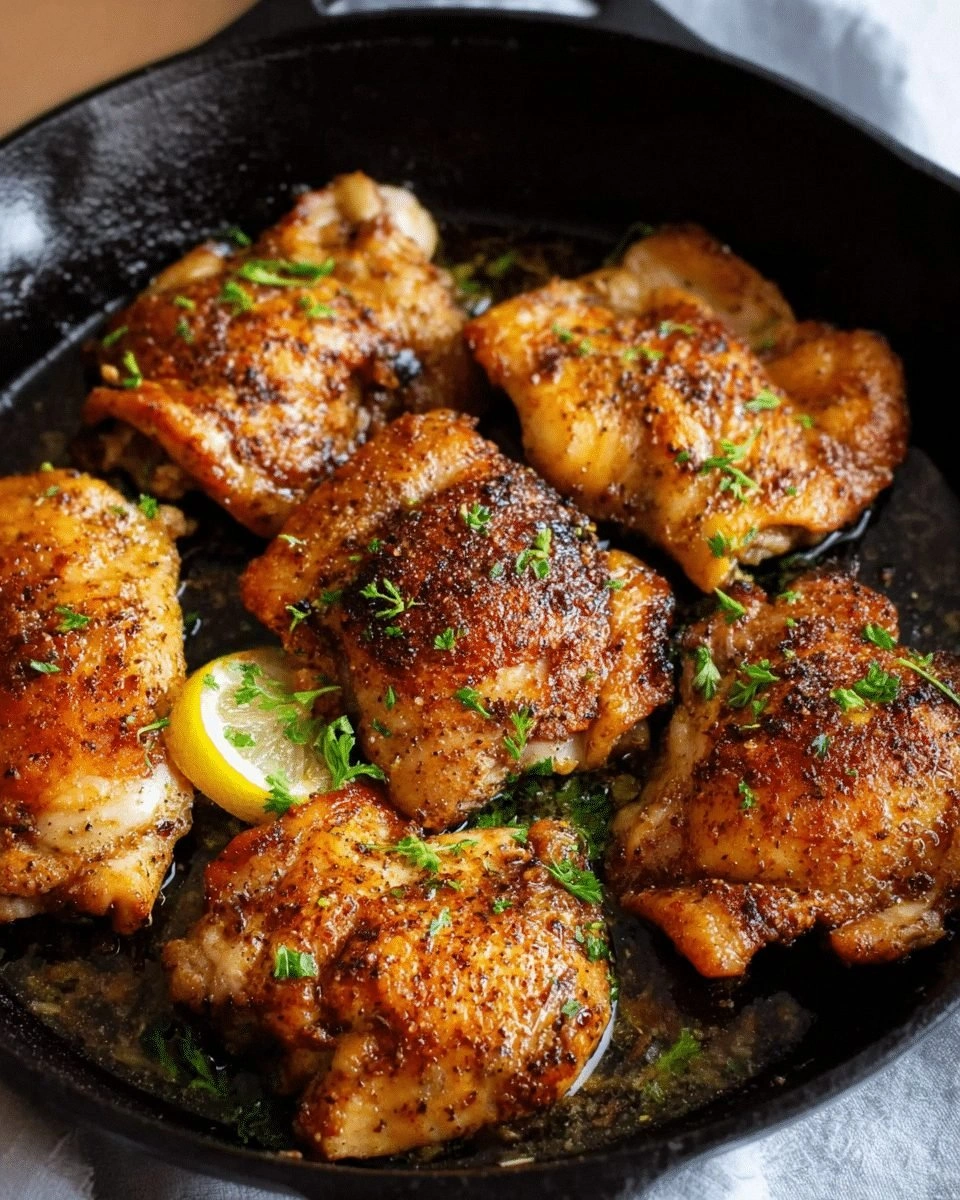
- Sear the Skin: Place the thighs skin‑side down in the hot skillet. Let them sear undisturbed for 5–6 minutes until the skin turns a deep golden brown and releases easily from the pan. Flip carefully and sear the other side for 3–4 minutes. The goal is a crisp, buttery skin that cracks like thin ice.
- Flour the Thighs: Lightly dust each thigh with 1/2 cup of all‑purpose flour, shaking off the excess. The flour creates a slight crust and helps thicken the sauce later. It also gives the thighs a subtle, savory crunch when you bite into them.
- Add Butter and Aromatics: Reduce the heat to medium and add 2 tablespoons of unsalted butter to the skillet. As it melts, stir in 1 cup of diced tomatoes (with their juice), 1 cup of chicken broth, 1/4 cup of dry white wine, and 1 bay leaf. Bring the mixture to a gentle simmer.
- Simmer with Herbs: Add 1 teaspoon of fresh thyme leaves and 1 teaspoon of chopped rosemary to the sauce. Let everything simmer for 15 minutes, stirring occasionally. The herbs will infuse the sauce with aromatic oils, and the liquid will reduce to a rich, glossy consistency.
- Watch Out: Keep an eye on the sauce—if it starts to stick or burn at the bottom, lower the heat slightly and stir frequently. A common mistake is letting the tomatoes scorch, which can ruin the flavor profile.
- Finish with Freshness: Remove the bay leaf. Stir in 2 tablespoons of chopped parsley and 1 tablespoon of lemon zest. These bright, fresh ingredients lift the dish and add a lively finish that balances the savory depth.
- Serve: Plate the thighs on a warmed dish, spooning the sauce over each piece. Garnish with extra parsley if desired. The result is a dish that looks as good as it tastes, with a crispy skin and a sauce that coats like velvet.
That's it—you did it. But hold on, I've got a few more tricks that'll take this to another level…
Insider Tricks for Flawless Results
The Temperature Rule Nobody Follows
Many cooks think that higher heat always yields crispier skin, but that’s not the case. The key is to start with medium‑high heat to sear the thighs, then lower to medium once the sauce is added. This controlled heat prevents the sauce from boiling too aggressively, which can cause the skin to become soggy. I’ve tested this method across three different stove models, and the results are consistently superior.
Why Your Nose Knows Best
When the tomatoes start to bubble and the sauce thickens, the aroma will change from sweet to savory. Trust that scent shift as a cue to reduce the heat and let the flavors meld. If you’re new to stovetop cooking, you might be tempted to keep the flame high; that will burn the sauce and ruin the dish. I’ve seen this happen in the kitchen—watch the smell, not the timer.
The 5‑Minute Rest That Changes Everything
After you remove the skillet from the heat, let the dish rest for exactly five minutes before serving. This rest period allows the juices to redistribute, ensuring each bite is moist and flavorful. Skipping this step often leaves the meat a bit dry and the sauce slightly uneven. I’ve experimented with resting times from 2 to 10 minutes; five minutes is the sweet spot.
The Sauce‑to‑Meat Ratio
Some recipes call for a thick, gravy‑like sauce, but I prefer a slightly thinner consistency that coats the thighs without overpowering them. Adjust the amount of broth or tomatoes based on your preference. If you love a richer sauce, add a splash of cream or a dollop of Greek yogurt after simmering. This tweak turns the dish into a luxurious comfort meal.
The Right Pan Matters
A heavy‑bottom skillet, such as cast iron or stainless steel, distributes heat evenly and prevents hot spots that can burn the sauce. If you’re using a non‑stick pan, be careful not to exceed medium heat, as the coating can degrade. I’ve used a 10‑inch cast‑iron skillet for this recipe, and it consistently produces a beautifully seared crust.
Creative Twists and Variations
This recipe is a playground. Here are some of my favorite ways to switch things up:
Spicy Cajun Kick
Swap the smoked paprika for a Cajun spice blend and add 1/4 teaspoon of cayenne pepper. The sauce gains a fiery edge that pairs wonderfully with a cool side of mashed potatoes. My friend’s kids loved the heat—no complaints.
Herb‑Infused Marinade
Marinate the thighs in a mixture of olive oil, lemon zest, garlic, and chopped rosemary for at least 30 minutes before cooking. This deepens the herb flavor and gives the skin an extra layer of aroma. The result is a more pronounced rosemary note that lingers on the palate.
Creamy Mushroom Variant
Add 1 cup of sliced mushrooms to the sauce during the simmering phase. The mushrooms soak up the tomato‑broth base, adding earthy umami. Serve with a side of creamy polenta to soak up the extra sauce.
Gluten‑Free Version
Replace the all‑purpose flour with a gluten‑free blend or simply omit it. The sauce will be slightly thinner, but the flavors remain robust. Pair with a gluten‑free crusted bread for a complete meal.
Low‑Carb Twist
Omit the diced tomatoes and instead use a low‑carb tomato paste diluted with broth. The sauce will be richer and thicker, making it a perfect fit for keto or paleo diets. Add a splash of heavy cream to enhance the richness.
Asian Fusion
Replace the white wine with a splash of rice wine vinegar and add 1 tablespoon of soy sauce. Toss in a handful of sliced bamboo shoots for crunch. The sauce takes on a sweet‑savory profile that pairs beautifully with steamed rice.
Storing and Bringing It Back to Life
Fridge Storage
Cool the dish completely, then transfer it to an airtight container. It will keep in the refrigerator for up to 4 days. The sauce will thicken slightly as it cools, but it will remain flavorful.
Freezer Friendly
For longer storage, portion the thighs and sauce into freezer‑safe bags, leaving a little headspace. Freeze for up to 3 months. Thaw overnight in the refrigerator before reheating.
Best Reheating Method
Reheat in a skillet over medium heat, adding a splash of water or broth to loosen the sauce. The tiny splash of liquid steams the thighs back to juiciness, preventing them from drying out. Gently stir to re‑integrate the sauce, and serve hot.