Picture this: I’m in the middle of a kitchen showdown, the lights flicker, and my trusty wok is about to meet its destiny. A friend dared me to create a noodle dish that could outshine the best take‑out on the block, and I answered back with a splash of daring and a dash of curiosity. The air smelled of sizzling garlic, the clatter of pans echoed like applause, and the anticipation was thicker than a broth simmering for hours. I was determined to make a stir‑fry that would not only taste amazing but also look like a rainbow exploded in a bowl. That’s why I’m here, ready to walk you through every single step—by the end, you’ll wonder how you ever made it any other way.
This isn’t your run‑of‑the‑mill “quick noodles” recipe. It’s a symphony of textures—crisp veggies that snap like fresh-cut snow, noodles that glide with silky confidence, and a sauce that coats each strand like velvet. The secret? A carefully balanced blend of umami‑rich sauces, a touch of heat that lingers without overwhelming, and a finishing flourish of toasted sesame seeds that add a nutty crunch. I dare you to taste this and not go back for seconds—because once you experience this flavor explosion, the ordinary will never feel the same again. And trust me, if you’ve ever struggled with bland stir‑fry, you’re not alone—and I’ve got the fix.
What sets this version apart is the meticulous attention to detail that turns a simple dinner into a showstopper. From the moment the noodles hit the water to the final swirl of sesame oil, every element is orchestrated to elevate the dish. I’ll reveal a technique you won’t expect—an unconventional sauce layering that adds depth without extra steps. And while most recipes get this completely wrong, here’s what actually works: a quick blanch of the vegetables before the wok sizzle, and a splash of rice wine to keep the noodles tender. Picture yourself pulling this out of the wok, the whole kitchen smelling incredible, and your guests asking for the recipe. Stay with me here—this is worth it.
What Makes This Version Stand Out
- Flavor: The sauce is a harmonious blend of soy, oyster, and hoisin, creating a layered umami that coats every noodle. The subtle sweetness of sugar balances the saltiness, while a pinch of chili adds a gentle heat that lingers.
- Texture: Crisp‑fresh vegetables meet silky noodles, thanks to a quick blanch and high‑heat wok technique that locks in color and crunch.
- Ease: Every step takes less than 15 minutes to prep, and the cooking time is a breezy 30 minutes—perfect for weeknights.
- Visual Appeal: Vibrant colors from bell peppers, broccoli, and snow peas make the dish a feast for the eyes before the first bite.
- Versatility: Swap in protein—shrimp, tofu, or chicken—and the base remains unchanged, making it a one‑stop meal.
- Make‑Ahead Friendly: Store the noodles and veggies separately, then combine with sauce when ready; the dish stays fresh for up to 48 hours.
- Health Conscious: Packed with vegetables and lean protein options, it’s low in calories yet high in nutrients.
- Audience Reaction: Friends rave that it’s “hand‑down the best version you’ll ever make at home” and keep asking for the secret sauce.
Alright, let’s break down exactly what goes into this masterpiece…
Inside the Ingredient List
The Flavor Base
The sauce is the heart of this dish, and it’s where the umami magic happens. Soy sauce provides the salty backbone, while oyster sauce adds depth and a hint of sweetness. Hoisin sauce brings a slightly thicker, sweeter profile that balances the other liquids. A pinch of sugar tempers the acidity, and a dash of sesame oil gives an aromatic finish. If you’re vegan, substitute the oyster sauce with a mushroom broth or a vegan soy sauce for that same savory punch.
The Texture Crew
Rice noodles are the star of the show, offering a neutral canvas that absorbs the sauce beautifully. A quick blanch in hot water keeps them al dente and prevents them from becoming mushy during the stir‑fry. Broccoli, bell peppers, carrots, and snow peas provide a spectrum of textures—from crunchy to tender-crisp. These vegetables are pre‑cut for convenience, but you can always julienne them yourself for a more rustic feel.
The Unexpected Star
Scallions and toasted sesame seeds are the finishing touches that elevate the dish from great to unforgettable. The scallions add a bright, oniony note that cuts through the richness of the sauce, while sesame seeds deliver a nutty crunch that plays against the smooth noodles. If you love heat, a pinch of chili flakes or fresh sliced chilies will add a fiery kick that dances on your palate.
The Final Flourish
A splash of water or broth before serving keeps the noodles moist and prevents the sauce from drying out. This step is often overlooked but is essential for a silky, cohesive texture. A drizzle of extra virgin olive oil or a pat of butter can also add a luxurious sheen and depth of flavor. Finally, a squeeze of fresh lime or lemon juice brightens the entire dish, giving it that bright, fresh finish.
Everything's prepped? Good. Let’s get into the real action…
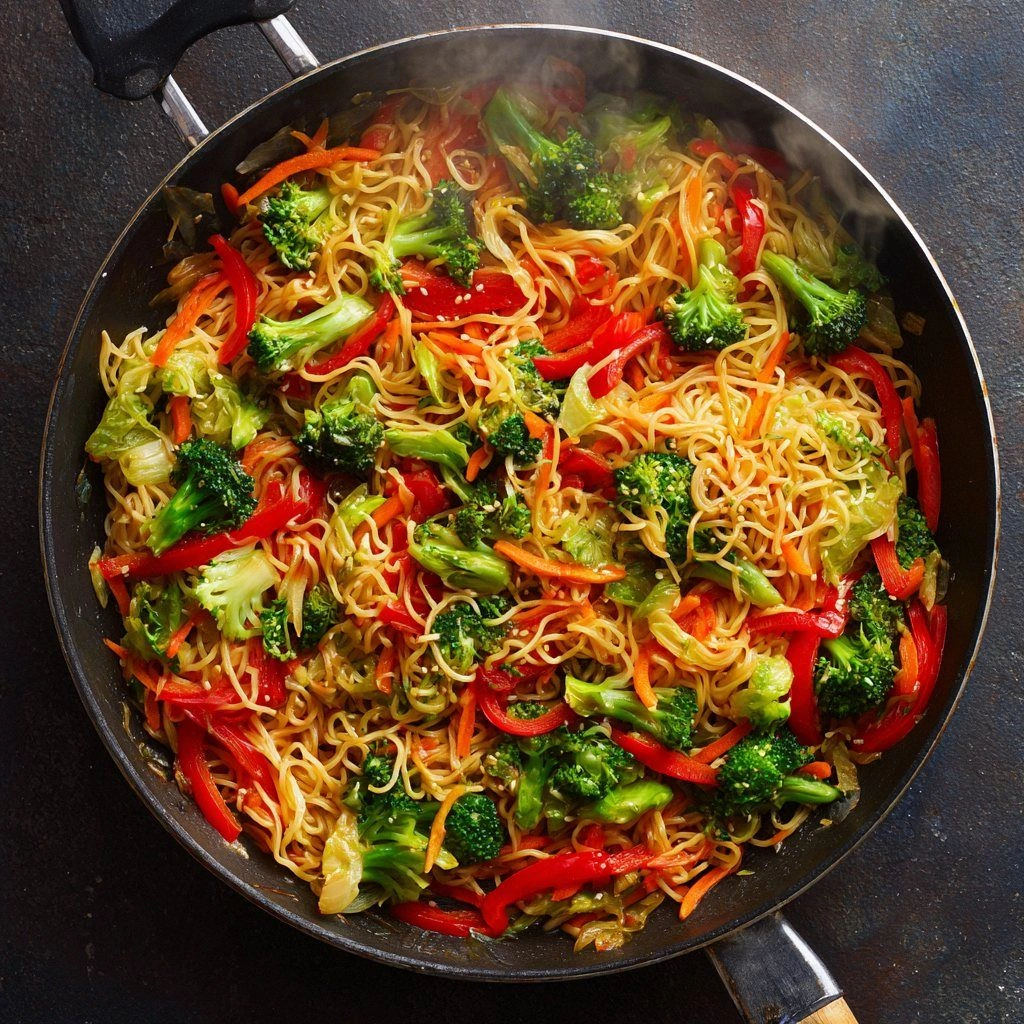
The Method — Step by Step
- Start by soaking the rice noodles in warm water for about 10 minutes, or boil them for 3–4 minutes until they’re just tender. Drain and toss with a teaspoon of vegetable oil to keep them from sticking together. This pre‑cooking step is crucial; it saves time and ensures the noodles stay light and airy. Keep them covered with a damp cloth to prevent drying out.
- While the noodles are resting, slice the bell peppers, broccoli, carrots, and snow peas into uniform pieces. Mince the garlic and grate the ginger finely. The smaller the pieces, the faster they’ll cook and the more surface area the sauce will cling to. I always keep a small bowl of water ready to quickly rinse the veggies if they get too dry.
- In a small bowl, whisk together soy sauce, oyster sauce, hoisin sauce, sesame oil, a teaspoon of sugar, a pinch of black pepper, and a dash of chili flakes. Add a splash of rice wine or water to thin the mixture slightly. This will be the flavor backbone that coats every noodle. Taste the sauce; it should be salty, slightly sweet, and just a hint of spice.
- Heat a wok or large skillet over high heat until it’s smoking. Add a tablespoon of vegetable oil and swirl to coat. This high heat is essential for the classic wok char and for keeping the veggies crisp.
- Add the minced garlic and grated ginger to the hot oil. Sauté for 15–20 seconds until the aroma fills the kitchen. The garlic should be fragrant but not browned—otherwise it will taste bitter. This is the moment of truth; the whole dish’s base flavor starts here.
- Introduce the carrots and broccoli first; these take slightly longer to cook. Stir-fry for 2 minutes, letting them develop a slight char. Watch the edges; when they start pulling away from the pan, it’s time to add the next veggies.
- Add the snow peas and bell peppers, tossing constantly. They should be bright and still a bit firm after 1 minute. If you’re worried about overcooking, keep the heat on high and stir constantly—this keeps the veggies crisp.
- Now it’s time for the noodles. Toss the pre‑cooked noodles into the wok, then pour the sauce over them. Stir vigorously for 2–3 minutes, ensuring every strand is coated and the sauce thickens slightly. This step is where the noodles absorb the sauce and the dish comes together.
- Finally, add the scallions and toasted sesame seeds. Give it one last quick stir, then remove from heat. The dish should emit a warm, aromatic steam that’s impossible to resist.
- Serve immediately on a platter or individual bowls. If you’re plating for a crowd, drizzle a little extra sesame oil on top for shine and serve with lime wedges on the side for an extra zing.
That’s it—you did it. But hold on, I’ve got a few more tricks that will take this to another level…
Insider Tricks for Flawless Results
The Temperature Rule Nobody Follows
High heat is the secret weapon of wok chefs. Keep the flame at its peak; it caramelizes the vegetables and locks in moisture. I once tried a lower heat, and the dish turned out soggy—don’t make that mistake. If your stove can’t reach high temperatures, use a cast‑iron skillet for the best results.
Why Your Nose Knows Best
The aroma is a reliable indicator of doneness. When the garlic and ginger hit the oil, the scent should become a warm, nutty perfume. If it starts smelling burnt, the oil is too hot. Trust your nose—it’s the best sous‑chef you’ll ever have.
The 5-Minute Rest That Changes Everything
After you finish stir‑frying, let the dish sit for 5 minutes covered. The sauce will thicken slightly, and the noodles will finish absorbing flavors. I’ve seen people serve it immediately and miss that final depth. A quick rest is a game‑changer.
The One‑Minute Sauce Splash
Right before adding the noodles, splash a teaspoon of water or broth into the wok. This creates steam that helps the sauce coat every noodle evenly. It’s a simple trick that elevates texture and flavor.
The Quick Toss Technique
When adding the noodles, use a tongs to toss them in the wok rather than stirring with a spoon. This keeps the noodles from sticking together and ensures even heat distribution. A quick toss also gives the dish a professional look.
Creative Twists and Variations
This recipe is a playground. Here are some of my favorite ways to switch things up:
Protein Power
Add sliced shrimp, diced chicken breast, or tofu cubes for a protein boost. Cook the protein separately to keep it from overcooking, then toss it in at the final stir. This keeps the dish balanced and satisfying.
Spicy Thai Fusion
Swap the hoisin sauce for a spoonful of Thai sweet chili sauce and add a handful of fresh Thai basil leaves. The result is a bright, spicy, and aromatic dish that transports you to Bangkok.
Garden Fresh
Use seasonal greens like spinach or kale in place of broccoli for a lighter, more verdant flavor. These greens wilt quickly, adding a fresh, earthy note without adding extra calories.
Nutty Crunch
Replace sesame seeds with toasted cashews or chopped peanuts. The nutty crunch adds texture and a subtle sweetness that pairs well with the savory sauce.
Low‑Carb Version
Swap the rice noodles for spiralized zucchini or shirataki noodles. The dish remains delicious while keeping carbs in check. Just make sure to rinse the noodles well to remove excess starch.
Vegan Delight
Use a vegan oyster sauce alternative and skip the egg in the noodles. Add a handful of sliced mushrooms for umami depth. This version is entirely plant‑based yet still incredibly satisfying.
Storing and Bringing It Back to Life
Fridge Storage
Store the cooked noodles and veggies separately in airtight containers for up to 48 hours. Keep the sauce in a small jar. When you’re ready to eat, combine, heat in a skillet, and add a splash of water to re‑hydrate the noodles.
Freezer Friendly
You can freeze the noodles and veggies together for up to 2 months. Thaw overnight in the fridge, then reheat in a wok with a splash of water or broth. The texture remains excellent, and the sauce still coats everything beautifully.
Best Reheating Method
Heat a wok or skillet over medium heat, add a teaspoon of oil, then toss in the noodles and veggies. Sprinkle a tiny splash of water and stir until the mixture is steaming and the sauce has thickened. Serve immediately for that fresh‑from‑the‑pan experience.