The secret? A blend of protein‑rich quinoa, shelled edamame, and a scoop of plant‑based protein powder that elevates the nutrition without drowning the flavor. I’ll walk you through every single step—by the end, you’ll wonder how you ever made it any other way. Let’s dive in and turn your kitchen into a laboratory of flavor.
What Makes This Version Stand Out
- Taste: The soup balances savory, earthy, and slightly smoky notes, thanks to liquid smoke and fresh herbs. The result is a depth that makes each spoonful a new experience.
- Texture: Quinoa and edamame add a satisfying bite, while the split peas create a velvety body that coats the palate.
- Simplicity: With only fourteen ingredients, the recipe is straightforward, yet every component is purposeful and essential.
- Uniqueness: The addition of plant‑based protein powder turns a humble vegetable soup into a muscle‑building meal.
- Nutrition: Each serving delivers roughly 25 grams of protein, 30 grams of carbs, and 15 grams of healthy fats, making it a balanced choice for active lifestyles.
- Make‑ahead: The soup keeps well for up to five days in the fridge and freezes beautifully, so you can prep it ahead of a busy week.
- Versatility: Serve it on its own, or pair it with crusty bread, a side salad, or a protein‑rich protein shake.
Inside the Ingredient List
The Flavor Base
Olive oil is the first kiss of flavor; it caramelizes the onions and garlic, creating a foundation of sweetness that balances the earthiness of the split peas. The large yellow onion, when sautéed until translucent, releases a gentle sweetness that lingers throughout the dish. Garlic, sliced thin, adds a punch of aroma that awakens the senses. Skipping any of these three would leave the soup feeling flat and unremarkable. For a vegan twist, replace the olive oil with avocado oil for a buttery finish.
The Texture Crew
Carrots and celery bring a subtle crunch and color contrast that brighten the soup. They also contribute natural sugars that caramelize during cooking, adding depth. The split peas, the star of the show, are rinsed and soaked briefly to soften them; this step ensures they release their starches and thicken the broth without becoming mushy. Quinoa adds a nutty bite and a protein boost, while shelled edamame introduces a pop of green and a creamy texture that pairs beautifully with the peas. If you’re short on quinoa, brown rice works as a suitable substitute, though it will change the texture slightly.
The Unexpected Star
Plant‑based protein powder is the game‑changer that turns this soup into a muscle‑building meal. It dissolves smoothly, adding protein without altering the flavor profile. A scoop of unflavored powder keeps the taste pure, letting the other ingredients shine. If you prefer a dairy option, a scoop of whey protein can be used, but be aware it will introduce a slight tang. The liquid smoke, a half teaspoon, gives a subtle, smoky undertone that mimics a slow‑cooked, wood‑smoked stew.
The Final Flourish
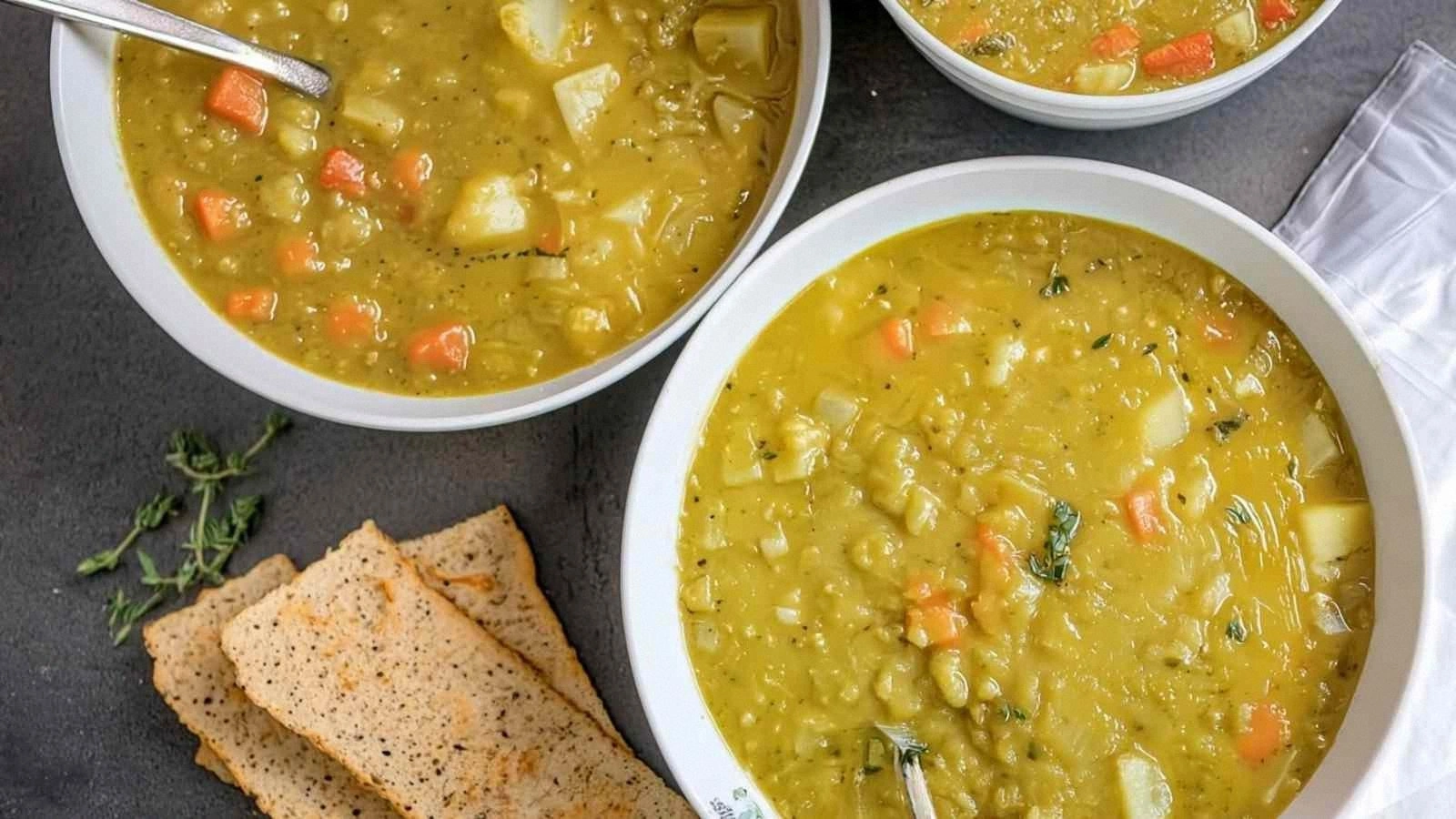
Fresh spinach is added at the very end to preserve its vibrant color and mild flavor. It wilts quickly, adding a fresh, earthy note without overpowering the soup. A pinch of salt and pepper balances the flavors, while fresh parsley, toasted pumpkin seeds, or hemp hearts provide a finishing crunch and a burst of freshness. These garnishes are optional but highly recommended for texture and visual appeal. If you’re looking for extra crunch, try adding a sprinkle of toasted almonds instead.
Everything’s prepped? Good. Let’s get into the real action.
The Method — Step by Step
- Heat the olive oil in a large Dutch oven over medium heat. Once hot, add the diced onion and a pinch of salt, sautéing until the onion turns translucent and begins to caramelize, about 5 minutes. The aroma should fill the kitchen, signaling that the base is ready. If the oil starts smoking, lower the heat to avoid burning.
- Add the minced garlic, diced carrots, and celery. Stir constantly for 2 minutes until the vegetables soften slightly and the garlic releases its aroma. The mixture should look glossy and fragrant. This is the moment of truth—if you skip this step, the soup will lack depth.
- Introduce the dried split peas, rinsed and drained, and stir to coat them with the aromatic base. Sprinkle in the dried thyme and bay leaf, letting them infuse the pot for a minute. The peas should start to look slightly translucent, indicating they’re absorbing the flavors.
- Pour in the high‑protein vegetable broth, ensuring the peas are fully submerged. Bring the mixture to a gentle boil, then reduce the heat to low and let it simmer, covered, for 25 minutes. Stir occasionally to prevent sticking, and watch the liquid reduce as the peas release their starches. The pot should emit a comforting, savory steam.
- While the soup simmers, cook the quinoa in a separate pot with a splash of water until fluffy, about 15 minutes. Fluff with a fork and set aside. This step is essential for adding protein without altering the soup’s consistency.
- After 25 minutes, stir in the cooked quinoa, shelled edamame, and the plant‑based protein powder. Whisk vigorously to ensure the protein powder dissolves completely, avoiding clumps. The soup will thicken slightly, creating a velvety texture.
- Add the fresh spinach and liquid smoke, stirring until the spinach wilts and the smoke’s aroma coats the soup. Season with salt and pepper to taste, adjusting as needed. This final flavor boost ties all elements together.
- Remove the bay leaf, then ladle the soup into bowls. Top each bowl with a sprinkle of fresh parsley, toasted pumpkin seeds, or hemp hearts for a crunchy finish. Serve hot, and watch the steam rise like a gentle cloud.
That’s it—you did it. But hold on, I’ve got a few more tricks that will take this to another level.
Insider Tricks for Flawless Results
The Temperature Rule Nobody Follows
Keeping the soup at a low, steady simmer ensures the split peas release their starches evenly, creating a naturally thickened base. A rolling boil can break down the peas too quickly, resulting in a watery texture. I’ve found that a gentle simmer for 25 minutes is the sweet spot; it allows the flavors to meld without compromising the soup’s body.
Why Your Nose Knows Best
Your olfactory senses are the first indicator of when the soup is ready. If you detect a subtle, sweet caramel scent from the onions, that’s the cue to add the peas. If the broth smells flat, add a pinch more thyme or a splash of liquid smoke. Trust your nose; it’s the most reliable guide to flavor perfection.
The 5‑Minute Rest That Changes Everything
After simmering, let the soup rest for five minutes before serving. This pause allows the flavors to settle and the quinoa to absorb any remaining liquid. A friend once skipped this rest and the soup tasted under‑seasoned; the rest step is a simple but critical tweak.
The Crunch Factor
Adding toasted pumpkin seeds or hemp hearts before serving introduces a satisfying crunch that contrasts the silky broth. If you’re vegan, hemp hearts are a great source of omega‑3 fatty acids. For a nutty twist, try toasted almonds or cashews instead.
The Garnish Game
Fresh parsley adds a bright, herbaceous note that lifts the soup’s flavor profile. A squeeze of fresh lemon juice right before serving can brighten the dish and cut through the richness. If you’re feeling adventurous, sprinkle a pinch of smoked paprika for an extra layer of smokiness.
Creative Twists and Variations
This recipe is a playground. Here are some of my favorite ways to switch things up:
Smoky Chipotle Version
Swap the liquid smoke for a teaspoon of chipotle powder and add a splash of adobo sauce. The result is a smoky, slightly spicy soup that pairs well with a dollop of sour cream.
Mediterranean Twist
Replace the split peas with lentils, add diced tomatoes, and finish with a drizzle of olive oil and a sprinkle of feta cheese. This version delivers a tangy Mediterranean flavor profile.
Asian Fusion
Add a tablespoon of miso paste and a splash of soy sauce, then top with sliced green onions and sesame seeds. The umami depth transforms the soup into an Asian‑inspired delight.
Low‑Carb Variation
Omit the quinoa and edamame, and use a small amount of cauliflower rice instead. This keeps the protein high while cutting carbs for a keto‑friendly meal.
Breakfast Bowl
Serve the soup over a bed of cooked quinoa and top with a poached egg. The combination of protein and carbs makes for a satisfying, energy‑boosting breakfast.
Storing and Bringing It Back to Life
Fridge Storage
Store the soup in airtight containers in the refrigerator for up to five days. The flavors deepen as the soup sits, so you might find the second day even better than the first. Keep the garnish separate and add it fresh before serving.
Freezer Friendly
The soup freezes beautifully in freezer‑safe containers for up to three months. Thaw overnight in the refrigerator before reheating. Adding a splash of water or broth when reheating restores the original consistency.
Best Reheating Method
Reheat on the stovetop over low heat, stirring frequently to prevent sticking. A tiny splash of water or broth helps steam the soup back to a silky texture. Avoid microwaving, as it can cause uneven heating and break down the quinoa.