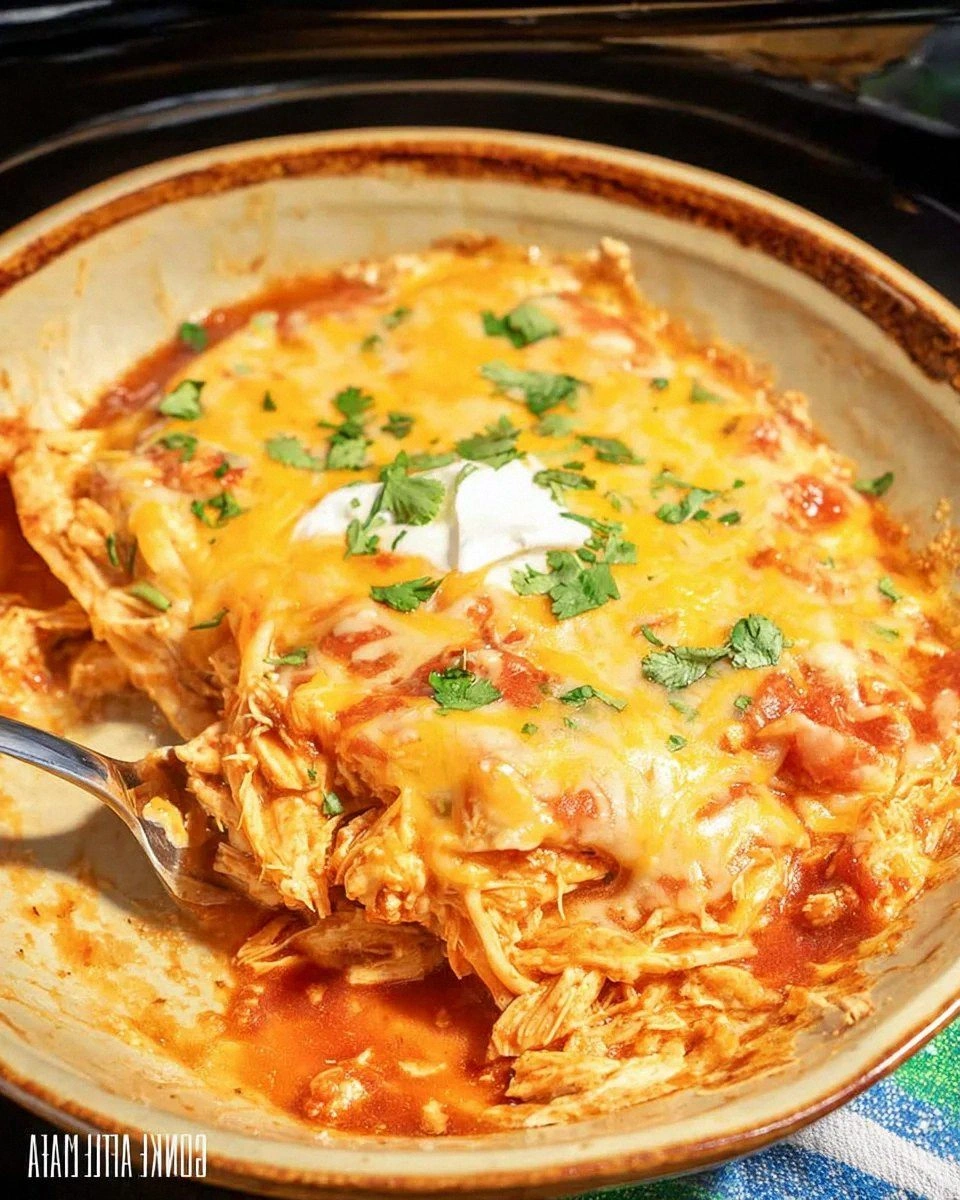
I still remember the night I swore off oven-baked enchiladas forever. There I was, balancing a scalding baking dish with one potholder, trying to slide a tower of tortillas oozing molten cheese onto a serving platter without looking like a toddler learning to walk. The filling spilled, the tortillas cracked, and my guests politely pretended the whole thing was "rustic charm." Fast-forward to the next weekend: same craving hit, but this time I dumped everything into my slow cooker, walked away, and returned to what can only be described as a Tex-Mex miracle. The chicken was falling-apart tender, the sauce had turned into velvet, and the tortillas had puffed into these dreamy, sauce-soaked clouds that tasted like they took culinary lessons in Oaxaca. I didn't even bother with plates—just parked the slow cooker on the trivet, handed out forks, and watched four grown adults fight over the crispy edges like kids over Halloween candy.
Picture this: you stroll through the door after a brutal day, the air outside is cold enough to make a penguin shiver, and your kitchen is already wrapped in the warm hug of cumin, garlic, and barely-bubbling enchilada sauce. The scent alone is a teleportation device straight to a cantina where someone hands you a lime-garnished beverage the second you sit down. Except you're still in sweats, the dog's tail is wagging, and dinner is doing its own thing without any last-minute panic. That, my friend, is the slow-cooker promise—and this casserole actually keeps it. No rubbery chicken, no watery sauce, no sad tortillas that dissolve into anonymous starch. Instead you get layers that stay distinct yet meld, flavors that taste like they simmered for eight hours even if you only had four, and a texture so luxurious you'll swear there's a hidden can of condensed soup (spoiler: there isn't).
What makes this version different? I treat the slow cooker like a flavor incubator, not a dump-and-pray appliance. We bloom the spices first, layer tortillas strategically so they act like tasty sponges, and finish with a quick blast of cheese that turns into the bubbly blanket of your dreams. I dare you to taste this and not go back for seconds—actually, I double-dare you, because I once ate half the insert while "tasting for seasoning" and still had to fend off my neighbor who wandered over "to borrow cinnamon" at 9 p.m. and left cradling a Tupperware like a newborn.
Stay with me here—this is worth it. By the end of this post you'll know why canned enchilada sauce benefits from a secret handshake of chipotle, how to keep corn tortillas from turning into sad soggy ribbons, and the single timing trick that separates restaurant-level casseroles from the gloopy mess most recipes produce. Let me walk you through every single step—by the end, you'll wonder how you ever made it any other way.
What Makes This Version Stand Out
Velvet-Sauce Technology: Most slow-cooker recipes dump sauce in raw and hope for the best. We give the tomato paste, chipotle, and spices a quick sizzle on the stovetop first—think of it as unlocking the VIP lounge of flavor. The resulting sauce coats each shred of chicken like liquid velvet, not thin cafeteria chili.
Tortilla Architecture: Instead of dumping everything in and praying, we layer corn tortillas between strata of chicken, beans, and cheese. They absorb sauce yet stay structurally intact, giving you the soul of an enchilada with the comfort-food hug of a lasagna.
Cheese Timing Magic: Add cheese too early and you get oily rubber; too late and it never melts. We stir half into the hot filling so it disappears into the sauce, then blanket the top for the final 15 minutes—resulting in both gooey interior and Instagram-pull stretch.
Weekday Armor: Fifteen minutes of morning prep, then the machine does the rest while you're adulting elsewhere. Walk back in, sprinkle cheese, set the table, and boom—dinner's ready before the kids finish arguing over whose turn it is to feed the fish.
Left-Forward Flavor: Enchiladas often taste flat the next day, but this casserole actually improves overnight. The spices throw a reunion party in your fridge, so lunch tomorrow might outrank dinner tonight—meal prep heroes, rejoice.
Crowd Psychology: Serve this at a potluck and watch the line form. There's something about a communal slow cooker that makes people lose their polite filters; they'll jab forks in like it's the last lifeboat on the Titanic. Bring a backup batch or risk a sad, empty drive home.
Ingredient Integrity: No canned cream-of-anything, no mystery packets. Just real chiles, fresh garlic, and chicken that tastes like chicken. Even the most stubborn "from-scratch only" food snob will ask for the recipe, probably while shoveling a third helping into their mouth.
Alright, let's break down exactly what goes into this masterpiece...
Inside the Ingredient List
The Flavor Base
Chicken thighs are the unsung hero here—juicier than breast, they stay succulent through the marathon simmer and shred into silky ribbons that cling to tortillas like they were born together. Dark meat also brings a subtle richness that balances the bright tomato and smoky chipotle, so skipping to breast meat leaves you with a drier, one-note filling. If you absolutely must use breast, swap in half bone-in thighs for insurance; otherwise you'll be chasing flavor you can't quite find. Buy them skinless but bone-in if possible—the bone lends a background savoriness that boneless pieces simply can't match, and pulling the meat off after cooking is a five-second job when it's fall-apart tender.
Chipotle peppers in adobo are the sneaky trumpet solo in this orchestra—just one pepper minced fine gives you smoke, heat, and a mellow sweetness that blooms over the long cook. Don't eyeball a glug of the sauce and hope for the best; measure the adobo separately so you control the campfire factor. If you're feeding heat-sensitive palates, seed the pepper first and start with half, then stir in more near the end once you've tasted. Leftover chipotles freeze beautifully in tablespoon-sized blobs on parchment, ready to rescue future chili, mayo, or even scrambled eggs from mediocrity.
The Texture Crew
Small corn tortillas are the backbone, not flour. Flour varieties turn gummy and pastelike, while corn holds its shape and adds that toasty masa perfume that screams authenticity. You want the six-inch size so they fit the slow cooker like Tetris pieces; if only large ones are available, cut them into quarters and overlap for the same coverage. Briefly toasting each tortilla over a gas burner for ten seconds per side amps up the nutty flavor, but skip this step on manic Monday mornings—it adds depth, not necessity.
Black beans bring earthy creaminess, but canned versions can taste like aluminum if you don't rinse. Dump them into a colander and run cold water until the bubbles disappear; this removes up to 40 percent of the sodium, giving you control over salt levels. Want a southwestern cowboy vibe? Swap in pinto beans or even a tri-bean mix—just avoid chickpeas, which stay stubbornly aloof and refuse to absorb the surrounding flavors.
The Unexpected Star
Frozen roasted corn sounds like a shortcut too far, but those charred kernels are flash-frozen at peak sweetness and add smoky pop without firing up a grill. Measure while still frozen; they thaw in minutes on the counter and shed any ice crystals that would dilute your sauce. If you can't find roasted, regular frozen corn plus a quick sauté in a dry skillet until blistered works in a pinch. Canned corn is the flavor graveyard—soggy, metallic, and about as exciting as elevator music.
The Final Flourish
Freshly shredded cheese melts like a dream, while pre-shredded bags contain anti-caking cellulose that can leave a faintly gritty texture and inhibit smooth melting. Buy a block of sharp cheddar for backbone flavor and a hunk of Monterey Jack for stretch, then blend them half-and-half. Low-fat versions seize up and weep oil, so go full-fat and walk an extra mile tomorrow if you're worried—your taste buds will thank you tonight. Crumbled queso fresco on top right before serving adds salty pops and a pretty snowcap, but save that for garnish, not the melty layer.
Everything's prepped? Good. Let's get into the real action...
The Method — Step by Step
- Pat the chicken thighs dry with paper towels—moisture is the enemy of browning—and season both sides with a teaspoon of kosher salt, half a teaspoon of pepper, and a whisper of cumin. Heat a skillet over medium-high until a drop of water skitters like a hockey puck, then add a tablespoon of oil and swirl. Sear the thighs skin-side down for three minutes; you're not cooking through, just laying down a flavor foundation that screams roasted depth. The sizzle should sound like applause, and the kitchen will start smelling like Sunday dinner at grandma's—trust those instincts.
- While the chicken rests, build the sauce in the same skillet so every browned bit joins the party. Drop the heat to medium and sauté diced onion until the edges turn translucent and sweet, about four minutes. Stir in tomato paste, chipotle pepper, adobo sauce, garlic, oregano, and a pinch of cinnamon; cook two minutes until the paste darkens from bright scarlet to brick red and the mixture smells like a smoky campfire. Deglaze with a cup of good chicken stock, scraping the pan so the fond dissolves into liquid gold—this step alone separates restaurant caliber from dorm room disappointment.
- Coat the slow-cooker insert with a whisper of oil, then ladle in just enough sauce to cover the bottom—think of it as insurance against sticking and flavor insurance for the first tortilla layer. Arrange six tortillas in a single overlapping layer; they should fit like shingles on a hip roof. Tear one tortilla into patches to fill gaps so every bite has that corn perfume instead of saucy voids.
- Scatter half the black beans and corn over the tortillas, then nestle the seared chicken on top. Pour the remaining sauce evenly, nudging things around so every component is baptized in that smoky river. The goal is stratified flavor, not a random dump; each layer should peek through the sauce like geological rock bands.
- Cover and cook on LOW for five to six hours or HIGH for three, until the chicken shreds effortlessly with a fork. Resist the urge to peek during the first two hours—heat escapes like a jailbreak and adds thirty minutes to your countdown. When the timer dings, transfer the chicken to a plate and shred with two forks; the fibers should separate into juicy ribbons that practically hum with flavor.
- Return the shredded chicken to the slow cooker, stirring in half the shredded cheese until it disappears into the sauce and acts like melty glue holding everything together. Taste and adjust salt; the mixture should make you close your eyes involuntarily—that's your green light.
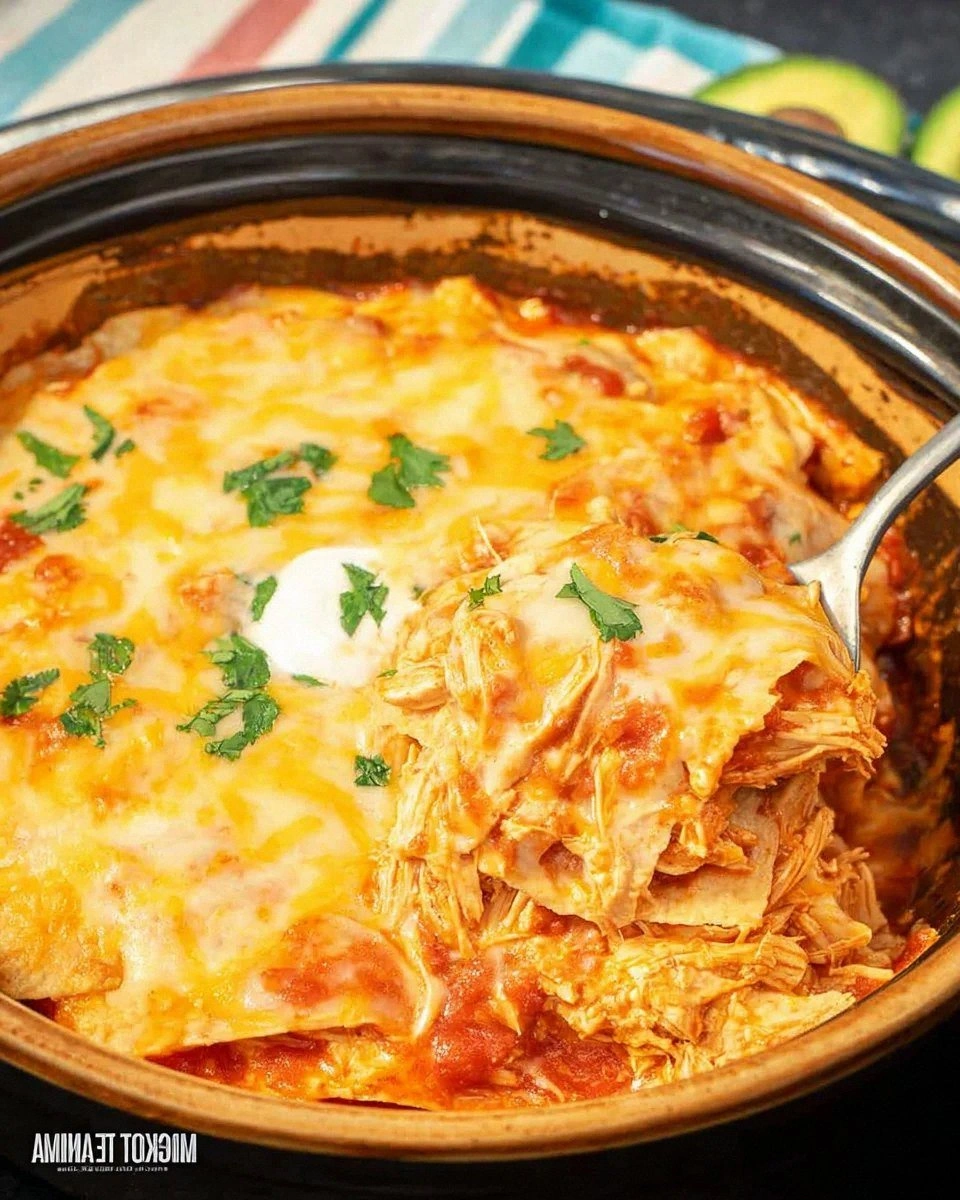
- Smooth the surface with a spatula, then blanket with the remaining cheese. Re-cover and cook on HIGH for fifteen minutes until the top is bubbling and the edges start caramelizing into chewy frico. If you own a slow cooker with a metallic insert, slip it under the broiler for two minutes for extra bronze beauty—just watch closely because cheese goes from bronzed to charcoal in a heartbeat.
- Let the casserole rest ten minutes; this short pause allows the molten layers to settle so your first scoop holds together instead of sliding into a soupy landslide. Garnish with cilantro, pickled red onions, and a squeeze of lime for brightness. Serve directly from the slow cooker set to WARM so second helpings stay at the perfect oozy temperature—and believe me, there will be second helpings.
That's it—you did it. But hold on, I've got a few more tricks that'll take this to another level...
Insider Tricks for Flawless Results
The Temperature Rule Nobody Follows
Starting with fridge-cold chicken extends cooking time and breeds uneven texture. Let the thighs sit on the counter for twenty minutes while you prep vegetables; they will cook more evenly and absorb seasoning better. This tiny pause shaves off thirty sluggish minutes and ensures every shred hits the safe zone simultaneously, eliminating that dreaded mix of dry strings and rubbery blobs.
Why Your Nose Knows Best
Forget timers for a moment—when the cumin-garlic aroma drifts into the living room and parks itself on the couch, you're about ninety minutes from perfection. This invisible signal means the spices have bloomed and the sauce has reduced just enough. If your house smells like a stadium nacho stand, congratulations, you nailed the timing and can start setting the table.
The 5-Minute Rest That Changes Everything
Cutting the rest short is like skipping savasana at yoga—you did all the work, then rob yourself of the payoff. Five extra minutes lets the cheese re-absorb its own oil, so you get stretch instead of grease puddles. Cover with a clean tea towel (not the lid) to trap warmth without steam, preserving that bronzed top you worked so hard to achieve.
Layer Like You're Building Lasagna
Slopping everything together produces cafeteria mush. Treat each tortilla like a structural beam: overlap by one inch, patch holes with scraps, and keep beans in a single layer so they heat evenly. Think horizontal masonry and your casserole will slice into tidy squares that hold their shape on the plate instead of collapsing into enchilada oatmeal.
Fresh vs. Dried Herb Reality Check
Dried oregano goes into the sauce to bloom; fresh cilantro waits until the finish line. Adding delicate herbs too early mutes their brightness and turns the color Army-grade. The contrast of deep, slow-cooked sauce and perky green top notes is what makes diners taste twice and ask, "What's in this?"
Creative Twists and Variations
This recipe is a playground. Here are some of my favorite ways to switch things up:
Green Chile Pork Party
Swap chicken for pork shoulder seared in cumin-coriander rub, replace enchilada sauce with a jar of tomatillo salsa and a handful of chopped roasted Hatch chiles. The pork braises into spoon-tender strands that absorb tart green sauce like edible sponges, perfect for pepper-heads who laugh in the face of mild.
Seafood Coastline Casserole
Use bite-size shrimp and flaky white fish, cut cooking time to ninety minutes on LOW, and fold in a cup of corn and roasted red peppers for sweetness. Finish with queso fresco and fresh oregano—tastes like a beachside cantina where the tortillas get sand between their layers and nobody minds.
Breakfast Enchilada Bake
Add a dozen beaten eggs whisked with milk to the sauce for a custardy base, layer in cooked chorizo and diced potatoes, then top with pepper Jack. Start it before dawn on Saturday; by the time the coffee's brewed your brunch is ready to feed the book-club crowd without the omelet-flipping circus.
Vegetarian Mushroom Marvel
Replace meat with roasted portobello strips and pinto beans, swap chicken stock for vegetable, and add a teaspoon of smoked paprika to keep the campfire vibe alive. Meaty mushrooms give you the chew you crave, while a final squeeze of lemon wakes up all the earthy flavors.
Buffalo Wing Detour
Use shredded rotisserie chicken tossed in Buffalo wing sauce, layer with blue cheese crumbles and celery slices, then finish with ranch drizzle. It's game-day comfort colliding with enchilada logic—messy, spicy, and guaranteed to make you the MVP of any couch-party potluck.
White Sauce Wonderland
Sub in a quick béchamel spiked with green chiles and Monterey Jack, add diced cooked chicken and spinach, then finish with panko tossed in butter for crunch. The result tastes like chicken enchilada met spinach-artichoke dip and decided to move into your slow cooker permanently.
Storing and Bringing It Back to Life
Fridge Storage
Let the casserole cool to room temperature, then ladle into shallow airtight containers; thin layers chill faster, preventing bacteria's beach party. It keeps up to four days, though good luck making it past Tuesday. Reheat individual portions in the microwave at 70 percent power with a damp paper towel on top—steam revives the tortillas and keeps cheese from turning into yellow cardboard.
Freezer Friendly
Portion into freezer bags, press out excess air, and freeze flat for space-saving bricks that thaw in under an hour in lukewarm water. Label with blue painter's tape and a Sharpil—future you will not remember what's inside that glacier. Use within three months for peak flavor; after that the cumin starts tasting like dusty regret.
Best Reheating Method
Oven revival beats the microwave for company: place casserole in an oiled baking dish, splash with two tablespoons of chicken stock, cover with foil, and warm at 325°F for twenty minutes. Remove foil for the last five to re-crisp cheese edges. Add a squeeze of fresh lime just before serving—tastes like day one with a suntan.