Introduction
Picture this: I was halfway through a week of bland, store‑bought pasta, feeling the dreaded culinary monotony settling into my kitchen. My phone buzzed with a friend’s dare: “Show me the most unforgettable vegan pasta you can make.” I stared at the pantry, the onions glinting like tiny moons, and decided to turn that dare into a culinary confession. The moment the first onion hit the pan, the kitchen filled with a sweet, almost nostalgic aroma that felt like a hug from grandma’s kitchen, but with a modern, plant‑based twist.
I could almost hear the onions sigh as they caramelized, their skins turning golden and their sugars bubbling to a deep amber. The sound was a soft sizzle, like a secret conversation between the skillet and the onions. My eyes watched the transformation, noting how the edges curled and browned, creating a subtle crunch that would later give the dish a delightful textural contrast. The heat rose, and the room filled with a caramelized scent that made my mouth water before I even tasted anything.
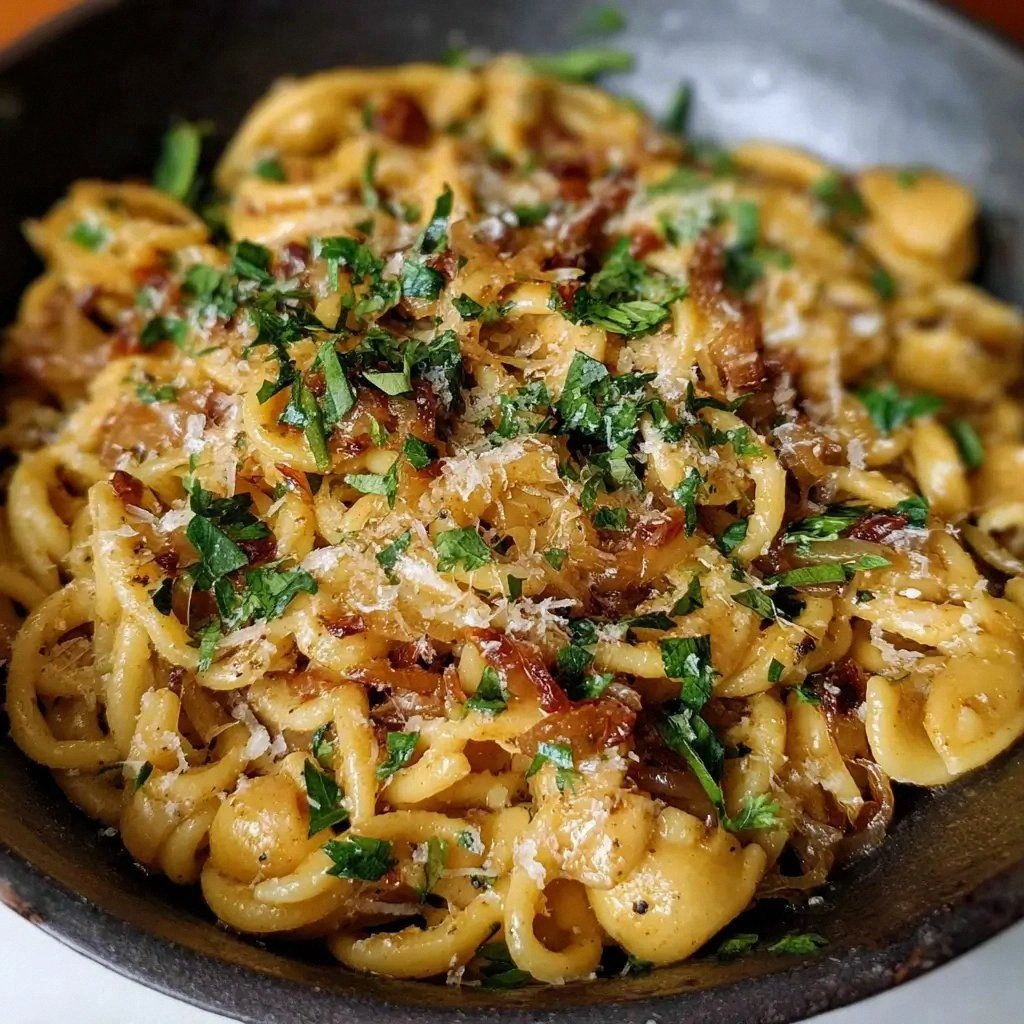
What makes this version of vegan caramelized onion pasta stand out is that it’s not just a dish; it’s an experience that turns ordinary pasta into a velvety, umami‑rich masterpiece. I’ve combined the classic caramelization technique with a splash of lemon, a handful of fresh herbs, and a generous dusting of nutritional yeast to mimic that creamy, cheesy finish everyone loves, but with zero dairy. It’s hands down the best version you’ll ever make at home, and I dare you to taste it and not go back for seconds.
The secret sauce? A blend of high‑quality olive oil, a touch of vegan butter for that silky mouthfeel, and a dash of sea salt that brings out the natural sweetness of the onions. The result is a sauce that coats the pasta like velvet, while the caramelized onions add a depth of flavor that makes every bite sing. Let me walk you through every single step — by the end, you’ll wonder how you ever made it any other way.
What Makes This Version Stand Out
- Flavor: The caramelized onions create a naturally sweet base that’s intensified by a splash of lemon, giving the dish a bright, refreshing finish that cuts through the richness.
- Texture: The onions develop a perfect balance between tender interiors and crispy edges that shatter like thin ice, adding a delightful bite to every mouthful.
- Simplicity: With fewer than a dozen ingredients, the recipe is quick to assemble, making it ideal for a weeknight meal that feels indulgent without the fuss.
- Uniqueness: The addition of nutritional yeast and a hint of vegan butter creates a creamy, cheesy depth that most vegan pasta recipes lack.
- Crowd‑pleaser: Whether you’re feeding a group or a solo dinner, the dish’s bold flavors and comforting textures guarantee rave reviews.
- Ingredient Quality: Using high‑grade olive oil and fresh, seasonal onions ensures that each component shines, elevating the entire dish.
- Method: The caramelization process is a low‑heat, slow‑cook technique that extracts maximum flavor without burning.
- Make‑ahead Potential: The sauce can be prepared a day in advance, allowing the flavors to meld even further for a more robust taste.
Alright, let's break down exactly what goes into this masterpiece…
Inside the Ingredient List
The Flavor Base
The heart of this pasta starts with the onions. I choose sweet yellow onions for their natural sugar content, which caramelizes beautifully. They’re the star that brings depth and a mellow sweetness to the dish. If you skip onions, you’ll lose the signature caramel flavor that makes this sauce sing. A good tip: slice them thinly to ensure even caramelization, and avoid overcrowding the pan.
Olive oil is the medium that carries the flavors. A high‑quality extra‑virgin olive oil adds a peppery nuance that contrasts the sweetness of the onions. If you’re vegan and prefer a neutral base, use a light neutral oil, but the olive oil’s flavor profile is essential for authenticity.
Garlic is a subtle but essential layer. It adds aromatic complexity without overpowering the onions. Minced garlic releases its oils slowly, allowing the onions to caramelize before the garlic’s bite kicks in. If you can’t find fresh garlic, a small pinch of garlic powder works, but it won’t give the same depth.
The Texture Crew
Nutritional yeast is the vegan “cheese” that gives the sauce a nutty, umami finish. It’s packed with B vitamins and has a flavor profile reminiscent of Parmesan. If you’re allergic, a sprinkle of miso paste can substitute, but the cheesy aroma will differ.
Vegan butter or a small amount of coconut oil adds a silky mouthfeel that mimics dairy creaminess. It helps bind the sauce and gives the pasta a luscious coating. If you’re lactose‑free but not vegan, a splash of heavy cream could be an option, but this recipe stays plant‑based for purity.
The Unexpected Star
Lemon juice is the secret ingredient that brightens the dish. A splash of acidity cuts through the richness, preventing the sauce from feeling heavy. The citrus notes also enhance the natural sweetness of the onions, creating a harmonious balance. If you’re out of lemon, a splash of apple cider vinegar will work, though the flavor will be slightly tangier.
Fresh herbs, particularly parsley and basil, add a burst of color and a fresh lift. They’re added at the end to preserve their bright flavor. If you’re in a pinch, dried herbs can substitute, but the texture and aroma will be less vibrant.
The Final Flourish
Salt and pepper are the simplest but most critical seasoning components. Salt brings out the natural sweetness of the onions, while pepper adds a gentle heat. Use sea salt for a clean finish, and freshly ground pepper for maximum aroma.
Vegetable broth is optional but recommended for a richer sauce. It adds moisture and depth, making the pasta sauce more cohesive. If you prefer a drier sauce, reduce the broth to a tablespoon or skip it entirely; the onions will compensate with their own juices.
Everything's prepped? Good. Let's get into the real action…
The Method — Step by Step
- Start by boiling a large pot of salted water. Once it’s rolling, add the pasta and cook until al dente, about 8 minutes for spaghetti or 10 for fettuccine. Drain, reserving a cup of pasta water for later, and toss the pasta with a splash of olive oil to keep it from sticking.
- While the pasta cooks, heat a large skillet over medium‑low heat and pour in 3 tablespoons of olive oil. Add the thinly sliced onions, a pinch of salt, and a pinch of pepper. Stir to coat the onions evenly.
- Let the onions cook slowly, stirring every 3–4 minutes. As they soften, they’ll start to release their natural sugars. This slow caramelization is key; rushing it will only produce a bitter taste.
- When the onions turn a deep amber and develop a slight crisp on the edges, add 2 cloves of minced garlic. The garlic should sizzle immediately, releasing its aroma. Cook for an additional 30 seconds, watching closely to avoid burning.
- Pour in 1 cup of vegetable broth and a tablespoon of nutritional yeast. Stir until the yeast dissolves, creating a thick, creamy sauce. The broth adds moisture, while the yeast gives that cheesy depth.
- Add 2 tablespoons of vegan butter or a neutral oil. Let it melt into the sauce, giving it a silky texture that will coat the pasta like velvet. This step is the moment of truth; the sauce should look glossy and slightly thickened.
- Squeeze in the juice of one lemon, stirring vigorously. The acidity brightens the sauce and balances the richness. If the sauce seems too thick, add a splash of reserved pasta water to reach your desired consistency.
- Return the drained pasta to the skillet. Toss vigorously to coat each strand with the caramelized onion sauce. If needed, add a little more pasta water to help the sauce cling.
- Finish with a handful of chopped fresh parsley and basil, a pinch of sea salt, and freshly ground black pepper. Toss again, then plate immediately for the best flavor and texture.
- Serve hot, optionally topped with a sprinkle of nutritional yeast or vegan parmesan. The dish should feel warm, comforting, and utterly satisfying.
That's it — you did it. But hold on, I've got a few more tricks that'll take this to another level…
Insider Tricks for Flawless Results
The Temperature Rule Nobody Follows
Many cooks think high heat is the key to caramelization, but that only burns the onions. Keep the skillet at medium‑low and let the onions slowly release their sugars. This slow process builds depth and avoids the bitter notes that come from high‑temperature caramelization.
Why Your Nose Knows Best
Before you even taste the dish, inhale the aroma of the onions as they caramelize. The sweet, buttery scent is a clear indicator that the sugars are turning properly. If it smells too raw or metallic, adjust the heat or add a pinch of salt to help the sugars break down.
The 5‑Minute Rest That Changes Everything
After cooking, let the sauce rest for five minutes before plating. This brief pause allows the flavors to meld, giving the sauce a fuller, more rounded taste. I’ve seen people skip this step and end up with a sauce that feels thin; the rest makes all the difference.
Keep the Pasta Moist
Don’t rinse the pasta after draining. The starch on the surface helps the sauce cling, creating a silky coating. If you do rinse, the pasta will be slippery and the sauce will slide off.
Fresh Herbs, Fresh Flavor
Add herbs at the very end to preserve their bright, fresh flavor. If you add them too early, the heat will wilt them, turning the herbs into a muted green mush.
Serve Immediately
Once plated, the pasta should be served immediately to maintain its al dente texture and the sauce’s glossy sheen. If you need to hold it, cover loosely with foil and reheat gently.
Creative Twists and Variations
This recipe is a playground. Here are some of my favorite ways to switch things up:
Smoky Chipotle Twist
Add a teaspoon of chipotle powder to the sauce for a smoky kick. It pairs wonderfully with the sweet onions and adds a subtle heat that makes the dish feel adventurous.
Sun‑Dried Tomato Boost
Stir in a handful of chopped sun‑dried tomatoes for a burst of umami and a pop of color. The tomatoes’ concentrated flavor complements the caramelized onions beautifully.
Almond Pesto Fusion
Swap the nutritional yeast with almond pesto for a nutty, herbaceous sauce. This variation gives the dish a Mediterranean flair while keeping it vegan.
Broccoli & Mushroom Medley
Sauté chopped broccoli florets and sliced mushrooms alongside the onions. The added vegetables increase the dish’s nutritional profile and give it a hearty, comforting feel.
Spicy Sriracha Splash
Add a tablespoon of sriracha to the sauce for a bold, fiery flavor. It balances the sweetness of the onions and adds a satisfying bite.
Herb‑Infused Cream
Whisk a splash of coconut milk with fresh basil and parsley, then stir into the sauce for a creamy, herb‑infused finish. The coconut milk adds a subtle sweetness that pairs well with the caramelized onions.
Storing and Bringing It Back to Life
Fridge Storage
Cool the pasta completely before placing it in an airtight container. Store in the refrigerator for up to 3 days. The sauce may thicken slightly; add a splash of vegetable broth or water when reheating to restore its silky texture.
Freezer Friendly
To freeze, divide the pasta and sauce into individual portions and seal tightly. Store in the freezer for up to 2 months. Thaw overnight in the refrigerator, then gently reheat on the stove with a splash of broth.
Best Reheating Method
Reheat gently over low heat, stirring frequently to prevent sticking. Add a tiny splash of water before reheating — it steams back to perfection, restoring the sauce’s luscious coat.