Ever had a steak so tender that it practically melts in your mouth, yet still holds that smoky, charred bite you crave? I remember the night I was scrambling to impress a friend who had a strict “no meat” rule until the last bite. The kitchen was a battlefield—flames licking the skillet, a bottle of soy sauce nearly spilling, and my heart pounding like a drum. The result? A perfectly marinated flank steak that was so juicy it made me question every other recipe I’d ever tried.
Picture this: the sizzling sound as the steak hits the pan, a fragrant burst of garlic and lime that fills the air, and the first bite where the exterior is crisp, the interior buttery, and the flavors dancing like a salsa on your tongue. I’m talking about that moment when you realize you’re about to eat something that feels like a culinary revelation. If you’ve ever been disappointed by a steak that was either too dry or too greasy, this version will flip your expectations on its head.
What sets this recipe apart is a carefully balanced marination that infuses the meat with depth while keeping the cooking process straightforward. I’ll walk you through each step, from selecting the right cut to the final sear, so you’ll never have to guess what to do next. By the end, you’ll wonder how you ever cooked steak any other way—because this is hands down the best version you’ll ever make at home.
And before we dive into the method, let me drop a little secret: the key to this flavor explosion is a blend of citrus, spice, and a touch of sweetness. Most recipes get this completely wrong, either over‑marinating and losing the natural beefy taste or under‑marinating and missing the kick. I dare you to taste this and not go back for seconds. Let’s get started, and I promise the kitchen will smell incredible, the steak will look irresistible, and your guests will be begging for the recipe.
What Makes This Version Stand Out
- Taste: The combination of lime, garlic, and soy sauce creates a bright, umami-rich profile that cuts through the richness of the flank steak. This balance of sweet, salty, and acidic flavors keeps the palate engaged from the first bite to the last.
- Texture: A quick sear locks in juices while the marinated surface develops a caramelized crust, giving you the best of both worlds—tender interior, crisp exterior.
- Simplicity: With fewer than ten ingredients, you can achieve restaurant‑level flavor without a complicated prep routine. The steps are linear and forgiving, making it ideal for busy weeknights.
- Uniqueness: The addition of smoked paprika and a hint of brown sugar introduces subtle heat and sweetness that set this apart from standard marinades.
- Crowd Reaction: Friends who are skeptical about flank steak become fans after tasting this. The dish’s bold flavors are approachable for both meat lovers and those who prefer something lighter.
- Ingredient Quality: Using a high‑quality flank steak and fresh citrus elevates the dish, turning a simple cut into a gourmet experience.
- Cooking Method: The pan‑searing technique is quick and requires minimal equipment, making it accessible even if you only have a basic skillet.
- Make‑Ahead Potential: Marinating the steak up to 24 hours before cooking locks in flavor and saves time on busy evenings.
Alright, let’s break down exactly what goes into this masterpiece…
Inside the Ingredient List
The Flavor Base
At the heart of this recipe is the marination—soy sauce, lime juice, and garlic. Soy sauce provides the essential umami, while lime juice cuts through the richness of the meat with a bright acidity. Minced garlic adds a pungent aroma that becomes slightly sweet once it caramelizes on the grill. If you’re a fan of a deeper, slightly sweet note, add a teaspoon of brown sugar to the mix. Skipping any of these will change the flavor profile; the steak will still be good, but it won’t have the same punch.
The Texture Crew
Olive oil is your ally here, helping the steak develop a golden crust and preventing sticking. The oil also acts as a carrier for the spices, ensuring even distribution. Smoked paprika introduces a subtle smokiness that complements the charred exterior, while ground cumin adds earthiness. A half teaspoon of red pepper flakes offers a gentle heat that wakes up the palate without overpowering the natural beef flavor. If you prefer a milder version, simply reduce the pepper flakes to a pinch.
The Unexpected Star
Fresh cilantro is the final flourish that brightens the dish. Its bright, citrusy notes cut through the richness and add a pop of color. If cilantro is not to your taste or is unavailable, parsley can serve as a suitable substitute, though the flavor will be slightly different. A small splash of honey or maple syrup can replace the brown sugar if you’re looking for a different sweetener. Remember, each substitution will slightly alter the final taste, but the overall structure remains intact.
The Final Flourish
Seasoning with salt and pepper to taste is essential for balancing the flavors. Salt enhances the umami of the soy sauce, while pepper adds a mild heat. Don’t be afraid to adjust the amount of salt if you’re watching sodium intake; the soy sauce already contributes a significant amount. If you’re looking to reduce sodium further, opt for a low‑sodium soy sauce variant. The steak’s natural juices will still carry plenty of flavor.
Everything’s prepped? Good. Let’s get into the real action…
The Method — Step by Step
- First, trim any excess fat or silver skin from the flank steak. This step ensures even cooking and a cleaner presentation. Use a sharp knife to slice off any visible connective tissue. A clean surface also helps the marination adhere better.
- In a medium bowl, whisk together soy sauce, lime juice, minced garlic, brown sugar, olive oil, smoked paprika, cumin, and red pepper flakes. The mixture should have a slightly viscous consistency, ensuring it coats the steak evenly. If you’re using fresh cilantro, reserve it for later.
- Place the flank steak in a resealable plastic bag or shallow dish. Pour the marinade over the steak, ensuring it’s fully submerged. Seal the bag and refrigerate for at least 30 minutes, preferably 2 hours, to allow flavors to penetrate the meat. The longer the steak marinates, the more tender it will become.
- Remove the steak from the refrigerator and let it sit at room temperature for 15 minutes before cooking. This helps the steak cook more evenly. Pat the steak dry with paper towels to remove excess liquid; a dry surface is key for a good sear.
- Preheat a cast‑iron skillet or heavy‑bottom pan over medium‑high heat. Add a splash of oil—just enough to coat the bottom. The pan should be hot enough that a drop of water sizzles instantly.
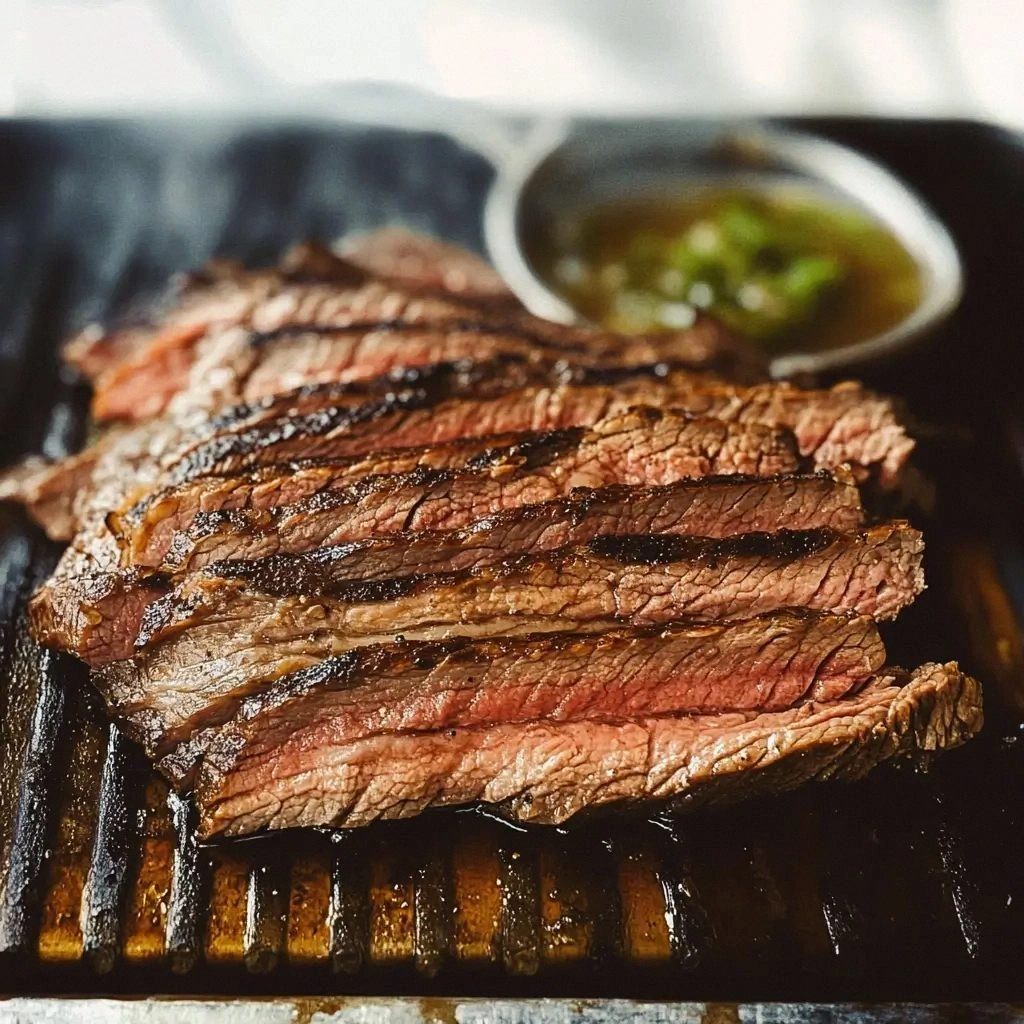
- Place the steak in the pan and let it sear without moving for about 3–4 minutes. The steak should develop a deep brown crust and release easily from the pan. This is the moment of truth; watch for the sizzling sound that signals the crust is forming.
- Flip the steak and sear the other side for another 3–4 minutes. The internal temperature should reach 130°F for medium‑rare. Use a meat thermometer for accuracy. If you prefer more doneness, add a minute or two per side.
- Remove the steak from the pan and let it rest on a cutting board for 10 minutes. Resting allows juices to redistribute, keeping the meat moist. While resting, sprinkle fresh cilantro over the steak for a burst of color and freshness.
- Slice the steak thinly against the grain. Cutting against the grain shortens the muscle fibers, resulting in a more tender bite. Arrange the slices on a platter, drizzle any leftover pan juices, and serve immediately.
That’s it— you did it. But hold on, I’ve got a few more tricks that will take this to another level. These insider tips will help you avoid common pitfalls and elevate the dish to a new height of flavor.
Insider Tricks for Flawless Results
The Temperature Rule Nobody Follows
Many people think “high heat” is always best for steak. In reality, a moderate heat allows the steak to sear evenly without burning the exterior. Use a thermometer to monitor the pan temperature; aim for 375–400°F. If the pan gets too hot, the steak will char on the outside and stay raw inside.
Why Your Nose Knows Best
Before you even taste the steak, give it a sniff. A slightly sweet, citrusy aroma indicates the marinade has worked its magic. If the smell is flat, you may need to let it marinate longer. Your nose is a reliable guide to flavor development.
The 5-Minute Rest That Changes Everything
Resting the steak for 5 minutes is often overlooked, but it’s the secret to juicy, tender meat. During this brief pause, juices redistribute, preventing them from spilling onto the cutting board. Skipping this step will leave you with a dry, uneven bite.
Use a Cast-Iron Skillet for the Ultimate Crust
A cast‑iron skillet retains heat better than stainless steel, giving you a consistent sear. The heavy base also ensures the steak cooks evenly from edge to edge. If you don’t have cast iron, a heavy‑bottom non‑stick pan will work, but the crust may not be as pronounced.
Add a Splash of Vinegar After Searing
Right after searing, splash a teaspoon of rice vinegar over the steak. The acidity cuts through the fat and enhances the citrus notes. This simple step adds a bright finish that can make the dish feel more sophisticated.
Creative Twists and Variations
This recipe is a playground. Here are some of my favorite ways to switch things up:
Asian Fusion Roll
Wrap the sliced steak in a fresh rice paper roll with vermicelli, cucumber, mint, and a hoisin dipping sauce. The crisp vegetables contrast the tender meat, and the sauce adds a sweet‑spicy kick. Perfect for a light lunch or appetizer.
Mexican Street Tacos
Serve the steak in soft corn tortillas topped with diced onions, cilantro, and a squeeze of lime. Add a drizzle of chipotle mayo for heat. This variation turns the dish into a vibrant street‑food experience.
Mediterranean Platter
Pair the steak with a Greek salad, roasted vegetables, and tzatziki sauce. The yogurt‑based sauce balances the richness of the meat, while the herbs echo the fresh cilantro in the original recipe.
Spicy Pineapple Glaze
Marinate the steak with a mixture of pineapple juice, soy sauce, and a dash of sriracha. After searing, brush on a glaze of the same mixture reduced in a pan. The pineapple’s natural sugars caramelize, giving a sweet, smoky finish.
Herb‑Infused Butter Finish
Finish the steak with a pat of herb butter—mix softened butter with minced garlic, parsley, and a pinch of sea salt. Let it melt over the hot steak for a silky, aromatic layer. This classic touch elevates the dish to a new level of decadence.
Smoky BBQ Sliders
Serve the steak in mini slider buns with coleslaw and a smoky BBQ sauce. The crunchy slaw and tangy sauce add layers of texture and flavor that complement the steak’s tenderness.
Storing and Bringing It Back to Life
Fridge Storage
Store leftover steak in an airtight container in the refrigerator for up to 3 days. Wrap the steak tightly in parchment paper or foil to preserve moisture. When you’re ready to reheat, let it sit at room temperature for 10 minutes to ensure even heating.
Freezer Friendly
For longer storage, freeze the steak in a single layer on a baking sheet before transferring it to a freezer bag. This prevents clumping and makes thawing easier. The steak stays best when frozen for no more than 3 months.
Best Reheating Method
Reheat the steak in a skillet over low heat, adding a splash of water or broth to create steam. Cover the pan briefly to trap moisture. Finish with a quick sear to restore the crust. A tiny splash of water before reheating steams the meat back to perfection, preventing it from drying out.